
How to Turn Your Existing Skills Into a Remote Career?!
One of the biggest challenges people face when trying to start a remote career is figuring out where to begin.
You may have years of work experience, but if you’ve never worked remotely, it can be difficult to see how your skills fit into a different role or how to convince an international employer to give you a chance.
What if you don’t need to start from zero?
In this interview, nurse and healthcare operations professional Chinanu shares how she used her nursing and business experience to explore remote work, build new skills and pursue international opportunities.
From identifying transferable skills and building a portfolio to networking with international companies and dealing with location restrictions, Chinanu shares practical lessons from her own journey.
If you’re looking to work remotely with international clients or companies but aren’t sure how to turn your current experience into new opportunities, her advice can help you take your first steps.
 Meet Chinanu,
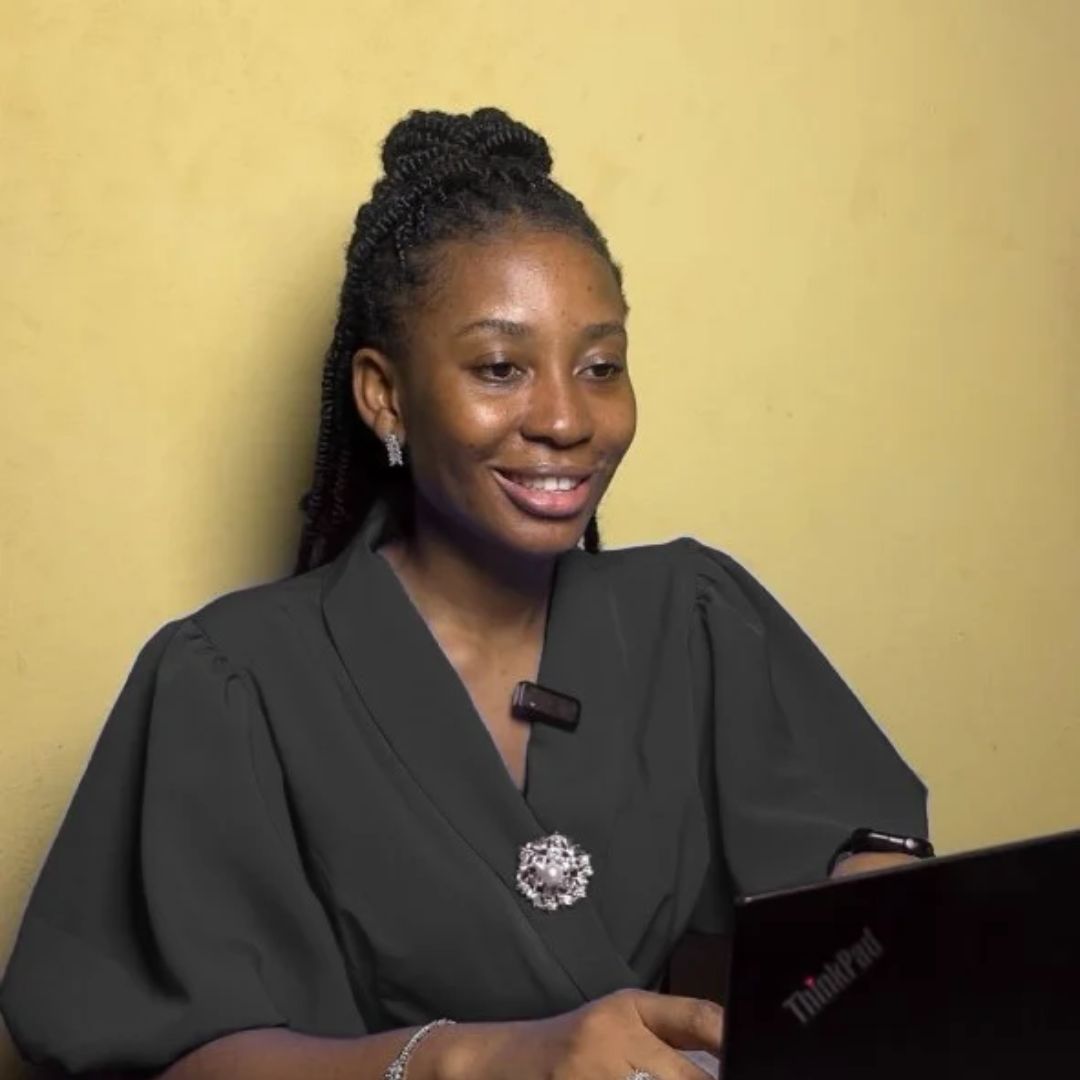
After five years in clinical nursing, Chinanu began exploring how she could use her existing skills to build a career beyond the bedside.
Today, she’s building NurseShift Africa, a community helping African nurses and healthcare professionals explore opportunities beyond traditional bedside nursing, including remote healthcare, digital health and AI.
Chinanu’s journey is a great example of how you can take the skills you’ve built in one profession and use them to pursue remote opportunities in a new direction.
Transferable Skills: You Are Not Starting From Zero
💬 You already had five years of nursing experience when you decided to move toward remote work. What made you believe your existing experience could actually lead to a remote career, and how did you figure out which skills were transferable?
For me, the realization came from something I was already doing.
While working as a nurse, I was also helping run an e-commerce business.
I was supporting customers, coordinating daily operations, following up on orders and deliveries, communicating with different people and making sure things got done.
That experience made me realize that I was already using skills outside the clinical environment.
Nursing had also taught me communication, critical thinking, documentation, time management, problem-solving and how to work under pressure.
I began asking myself: where else are these skills useful? I knew there was more to nursing than the bedside, and I wanted to explore those possibilities.
I didn’t have everything figured out at once.
I started researching remote healthcare roles and looking at the responsibilities involved.
I could see connections between what I had done in the hospital and roles such as patient support, care coordination, healthcare administration and operations.
That was how I began to understand transferable skills.
You don’t necessarily have to abandon what you know.
Sometimes, you need to understand how to apply it in a different environment and learn the tools that environment requires.
💬 For someone who has worked in one profession for years and thinks, “None of my experience is useful for remote work,” how would you suggest they start identifying the skills they already have that employers or clients could pay for remotely?
I would tell them to stop looking at their job title for a moment and start looking at the work they actually do.
What problems do people come to you to solve? Do you communicate with clients, organize information, manage schedules, train others, resolve complaints, document activities or coordinate a team? Those are all things worth examining.
Then look at where those skills are needed.
Someone who regularly handles patient enquiries, for example, may have skills relevant to customer support or patient navigation.
Someone who coordinates activities in a hospital department may have experience that can translate into operations or project coordination.
But identifying the skill is only the beginning. You still need to understand how the remote workplace functions, learn the relevant tools, and demonstrate that you can deliver in that environment.
I’ve seen this through NurseShift Africa’s Remote Work Ready Intensive.
We’ve had nurses with 15 and 17 years of clinical experience who initially weren’t sure how their experience would translate.
With guidance and practical exposure, they began to see the possibilities.
We’ve also had people much earlier in their careers who needed someone to help them identify a starting point.
Sometimes, people already have more to offer than they realize. They simply need direction, the right learning resources, and an opportunity to practise.
Choosing a Remote Career Path
💬 Once you identified the skills you could take with you, how did you decide what kind of remote work to pursue? What helped you narrow down the roles and opportunities that were actually a good fit
I started with remote healthcare because it connected naturally with my nursing background.
I already had an understanding of the healthcare environment, the importance of patient communication, and the need to handle information responsibly.
That’s where I compared my experience with what’s needed in healthcare administration, patient support, care coordination and operations.
At the same time, my experience running an e-commerce business had given me a foundation in customer support, administration and operations.
As I continued learning, I also became interested in recruitment, talent coordination, digital health and community operations.
I don’t naturally like putting myself in a box, because I’ve always enjoyed learning different things and working across different areas.
Over time, I began to understand that the important question isn’t simply, “What job title do I want?” It’s also, “What can I do well, what problems can I solve, and where are those skills needed?”
That said, I don’t think everyone needs to approach it the way I did.
If you prefer a more focused career path, choose one role that fits your strengths, learn the tools associated with it, and build evidence that you can do the work.
My own journey has been about finding the connections between my skills and building on them, rather than pursuing opportunities without a clear reason.
Learning the Skills Remote Employers Need
💬 What did you have to learn or improve before you felt ready to compete for remote opportunities? Were there any skills, tools or ways of working that made a bigger difference than you expected?
I had to learn that having transferable skills wasn’t enough on its own.
I also needed to understand digital tools, remote workflows and how to demonstrate my abilities to someone who had never worked with me before.
I started improving my CV and LinkedIn profile, learning how to present my experience in a way that connected with the roles I wanted, and becoming more familiar with tools used for collaboration, documentation, scheduling and operations.
I also began learning about automation, AI workflows and systems such as Airtable.
I now use Airtable to manage aspects of NurseShift Africa’s operations. I have also worked on practical systems for organizing information and supporting workflows, rather than simply learning tools without applying them.
My introduction to AI came through a scholarship opportunity from Nurses in Charge last year.
It opened my eyes to possibilities I hadn’t seriously considered before. I realized that technology didn’t have to mean becoming a software engineer.
There were ways to use these tools to solve everyday problems in healthcare and business.
Another thing I had to improve was my visibility and confidence.
You can have useful skills, but if your CV doesn’t communicate them, your LinkedIn profile doesn’t reflect them, and you have no evidence of what you can do, it becomes harder for people to recognize your value.
Learning, practising and building examples of my work have made a significant difference. I still have more to learn, and I’m comfortable with that.
Positioning Yourself Without Traditional Experience
💬 How did you position yourself when applying for remote opportunities without having a traditional background in the roles you were applying for? What did you put forward instead of simply saying, “I’m new to this”?
I focused on what I could already do and the evidence behind it.
Rather than presenting myself as someone who was simply looking for a chance to enter a new field, I connected my previous experience to the responsibilities of the role.
My nursing background demonstrated that I could communicate, document accurately, handle sensitive situations and work under pressure.
My e-commerce experience demonstrated that I could support customers, coordinate workflows and contribute to daily operations.
I also worked on making my CV more specific.
Instead of listing duties alone, I tried to show the scope of my work and the results.
For example, the e-commerce business grew across seven locations and developed a team of about 15 people. That gave me a real operational context to discuss.
I paid attention to my LinkedIn profile and began building a portfolio so that my experience wasn’t confined to what I said about myself.
And I wanted people to see examples of how I approached problems and organized work.
I also learned that positioning yourself takes time.
You have to keep building your skills, communicating what you know and making your work visible.
Through NurseShift Africa, I now encourage other professionals to do the same.
You don’t have to wait until you’ve secured your dream role before you start demonstrating what you can do.
Getting Your First Remote Opportunity
💬 How did you get your first remote opportunity? What did you actually do to find it, and what do you think helped you get that first yes?
My first steps into remote work came through administrative and support work for individual clients, including people in the US and UK.
Those early experiences gave me practical exposure to working with people remotely, managing tasks and communicating across distance.
When I began looking more seriously for international healthcare opportunities, I was intentional about using LinkedIn.
I would research companies, read about their work and look into the people involved.
I didn’t want to apply blindly, especially because I had already encountered suspicious opportunities that didn’t seem legitimate.
When I found a company that interested me, I reached out to people connected with it and tried to understand the organization before applying.
I didn’t approach every conversation by immediately asking for a job.
I focused on making genuine connections and learning more about the work.
Eventually, I applied for a medical virtual assistant opportunity. T
he application itself took several hours because it was detailed. I went through two interviews and received an offer.
I ultimately decided not to accept because the contract wasn’t the right fit for me at that stage.
I think my preparation, my clinical background, the way I presented my experience and the time I spent understanding the opportunity all contributed to getting that offer.
Although I didn’t accept it, the experience showed me that I could compete for remote healthcare opportunities.
One thing I learned is that the first yes doesn’t always have to mean accepting any offer available.
You also need to evaluate whether the role, expectations and terms make sense for you.
Working Remotely From Africa: Building Trust Across Borders
💬 Many people worry that international employers or clients won’t take them seriously because of where they live. You’ve worked remotely from Cameroon with international teams. What helped you build trust and prove your value?
I won’t pretend that location never matters.
I’ve encountered opportunities where being based in Africa became a barrier, even when the role was described as remote.
Some companies have geographic restrictions, and others may have concerns about connectivity, communication or working across time zones.
But I also believe we can do more to demonstrate our readiness.
For me, that means communicating professionally, understanding the work, meeting deadlines, being honest about what I can deliver and showing evidence of my skills.
A good CV is useful, but being able to demonstrate your abilities through projects, workflows, a portfolio or previous results is even more powerful.
Infrastructure matters, too.
Reliable internet and a plan for handling outages are important when you’re working remotely.
I learned that lesson through a difficult experience when connectivity affected my ability to continue an opportunity.
Since then, I’ve strengthened my backup arrangements. People should start with what they can reasonably afford and improve their setup as they grow.
I also believe trust is built through consistency.
You don’t have to convince everyone to hire you.
You need to find opportunities that are genuinely open to your location and show those employers that you can do the work.
This is one reason I started NurseShift Africa.
I want more African healthcare professionals to have access to practical guidance, opportunities to build relevant skills and a community where they can learn from one another.
Mistakes to Avoid When Starting a Remote Career
💬 What mistakes did you make when you were starting your remote career that you would want someone else to avoid?
One mistake was moving from carefully targeted applications to mass applying.
Initially, I spent time researching companies, tailoring my CV and making sure my LinkedIn profile reflected the experience I was presenting.
But job searching can become exhausting.
After spending so much time applying without getting the results I wanted, I reached a point where I started sending applications without the same level of customization.
Looking back, I don’t think that was the best approach.
A smaller number of relevant, well-prepared applications can be more useful than sending out many applications that don’t clearly communicate why you’re a good fit.
Another lesson was the importance of reliable internet and backup arrangements.
I knew connectivity was important, but I hadn’t fully appreciated how quickly an unexpected problem could affect a work opportunity.
I would also tell people not to underestimate the importance of visibility and networking.
You can keep learning privately, but if nobody knows what you’re building or what you can do, it becomes harder to create opportunities.
My advice is to choose a realistic direction, build the relevant skills, create evidence of your work, connect with people intentionally and apply thoughtfully.
And please, verify opportunities before sharing sensitive information or committing your time and money.
💬 What has been one of the biggest disappointments or setbacks you’ve experienced while building your remote career, and what did you change because of it?
One of my biggest setbacks was having an opportunity affected by internet connectivity.
It was a difficult experience because I understood the value of the work and what the opportunity could have meant for me.
It made me realize that being skilled and willing to work isn’t always enough; your working environment also has to support you.
I responded by improving my backup internet arrangements and thinking more practically about the infrastructure I need to work reliably.
I now encourage people to prepare within their means rather than assume that everything will always go as planned.
Another challenge has been navigating a remote job market where some opportunities aren’t genuinely accessible to people in my location.
That can be discouraging when you have invested time in an application and meet the stated requirements.
Those experiences have influenced how I approach my career and how I support others.
I want to help people build skills and evidence, but also learn to assess opportunities realistically, recognize restrictions, and avoid depending on a single path.
I’ve learned that a setback can show you what needs to change. It doesn’t necessarily mean you aren’t capable of doing the work.
💬 You’ve worked across customer support, administration, recruitment, operations and community work. How did you turn each new experience into something that opened the door to your next opportunity rather than simply collecting more job titles?
I look at the underlying skills and problems that connect the work.
My customer support experience taught me how to listen, communicate clearly, understand what people need and follow through.
My operations experience taught me how to coordinate activities, organize information and help work move from one stage to another.
Nursing strengthened my judgment, attention to detail and ability to work with people in situations that require care and responsibility.
When I moved into recruitment and talent coordination, I could apply some of those same skills to sourcing candidates, managing information, coordinating interviews and communicating with different stakeholders.
When I began building NurseShift Africa, I used my experience in healthcare, mentoring, operations and community support to develop educational activities, coordinate volunteers and create systems for managing the community.
I have also worked on practical digital tools and workflows, and I continue to learn how technology can make these activities more efficient.
For me, the goal isn’t to collect as many job titles as possible.
It’s to understand what each experience teaches me, how it connects to what I already know, and how I can use that knowledge to solve a new problem.
That is also how I think about career development.
You don’t have to treat every transition as starting from zero. Look for the skills that carry forward, then build the specific knowledge you need for the next environment.
Your First 30 Days: A Practical Plan to Start Working Remotely
💬 If someone wants to start working remotely with international clients or companies today but has no idea where to begin, what would you tell them to do during their first 30 days?
I would tell them not to try to learn everything at once. Start by understanding yourself, choosing a direction and building something practical.
Days 1–7: Identify your strengths and choose a role.
Look at your previous work, education, volunteering, business activities and everyday responsibilities. Identify the problems you know how to solve. Then research remote roles that use those skills. If you’re a healthcare professional, for example, you might explore patient support, healthcare administration, medical virtual assistance or digital health operations. Choose one main direction to start with.
Days 8–14: Learn the relevant tools and workflows.
Study the actual responsibilities of the role. Identify the tools employers commonly use and practise with them. Focus on learning enough to perform realistic tasks rather than collecting certificates without applying what you’ve learned.
Days 15–21: Build evidence of your ability.
Create one or two practical projects. You could develop a sample workflow, organize a mock customer-support tracker, create an appointment-management process or document how you would handle a common problem in your chosen field. Use fictional or properly anonymized information. Put your work into a simple portfolio and explain the problem you solved.
Days 22–30: Improve your visibility and start connecting.
Update your CV and LinkedIn profile to reflect your chosen direction and the evidence you’ve built. Research companies, connect with relevant professionals, ask thoughtful questions and begin applying to suitable opportunities. Verify that the roles accept applicants from your location.
The first 30 days may not get you a job, and I wouldn’t promise anyone that it will. The goal is to move from confusion to having a clear direction, relevant skills, visible evidence and a practical plan for pursuing opportunities.
And throughout those 30 days, keep learning and building. Don’t wait for everything to be perfect before you begin.
Lessons I Wish I’d Learned Earlier
💬 Looking back, what do you wish someone had told you before you made the transition to remote work?
I wish someone had told me that remote work is not necessarily easier work.
You may be working from home, but you still need discipline, concentration, communication, time management and the ability to manage your own working environment.
You still have responsibilities, deadlines and expectations to meet.
I also wish I had understood earlier how important it was to build evidence of my skills and make my work visible. Learning is important, but you need to practise what you learn and show people how you can apply it.
And I wish I had had easier access to someone who could guide me through the process. When I was a student and later when I started exploring career options, I knew I wanted to do more, but finding the right mentorship and guidance wasn’t always easy or affordable.
That experience is one of the reasons I care about helping others navigate their own transitions. Through NurseShift Africa, I want healthcare professionals to have access to information, practical learning and a community that can help them see possible paths forward.
You don’t need to know everything before you start. You do need to be willing to learn, practise, ask questions and keep building.
The journey becomes clearer as you take action.
💜Chinanu’s Mindset Tip:
“Start what you believe you should do, as long as it is something good. Give yourself time to learn, but don’t spend so much time preparing that you never begin building.”
You don’t have to be perfect before you start. Learn, practise, show your work and keep improving.
I believe there is nothing impossible for God. We may not see the results immediately, and the process may not look the way we expected, but faith, consistency and a willingness to keep learning can carry us a long way.
Trust God, start with what you have, and keep building.
