
How to Get International Clients as a Freelance Marketer From Abroad?
Working with clients in the US or UK can open up new opportunities for freelance marketers living elsewhere in the world. But having marketing skills isn’t always enough. You also need to know how to present your services, demonstrate your value, and understand what businesses actually need.
So, how do you stand out when you’re competing for international clients? And how do you turn your skills into something businesses want to invest in, rather than simply another service on their to-do list?
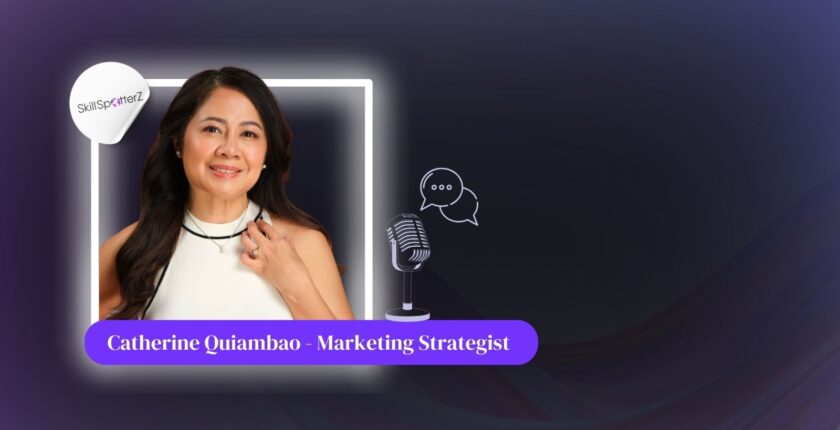
To explore this in a real, practical way, we spoke with Catherine Quiambao, a fractional CMO and marketing strategist based in the Philippines, who has been working remotely with international businesses since 2012.

Meet Catherine
Catherine Quiambao is a fractional CMO and Marketing Strategist based in Manila, Philippines, with over 22 years of experience in marketing.
She started her career in brand management, working with global pharmaceutical and home care brands, before building her own remote marketing consultancy in 2012. Since then, she has worked with SaaS, e-commerce, and FinTech businesses, helping them develop their brands, improve their marketing strategies, and grow their revenue.
Today, she partners with businesses and agencies in the US, UK, and Australia, helping them connect their business goals with the right marketing strategy, specialists, and systems. Her work focuses on brand strategy, marketing operations, email and retention marketing, and AI-powered workflows.
Understanding the international market.
💬 Why do businesses in markets like the US and UK choose to work with freelance marketing professionals based in other countries?
Most of the brands I work with are growing fast but have a very lean in-house marketing team, or none at all. At this stage, founders are torn between hiring and continuing to do everything themselves. They know they have momentum, but they can’t keep up. That’s usually when they reach out to a freelance marketing professional.
This is where I come in. I build systems and processes, document and improve how they already operate, and create a three- to six-month plan to help them hit their growth targets.
As for why they look beyond their own country, I think clients have realized that talent isn’t limited by geography. Remote work is now normal, and there’s a huge, untapped pool of talent worldwide. Working with a freelancer also spares them the full commitment of hiring an employee and all the benefits that come with one.
Choosing what services to offer.
💬 How would you recommend someone decide which specific marketing services to offer to international clients? What should they pay attention to?
I hate to start with “it depends,” but it really does. The best place to begin is an honest audit of yourself, the same way I’d audit a brand before building a plan. What are you already good at? What do people keep asking you to help with? And what do you enjoy enough to do every single week?
Then look at the market. Browse job posts and freelance platforms in the countries you want to work with, and notice which services keep showing up.
Some of the most in-demand ones I see are:
- Content creation and copywriting
- Email marketing and retention
- Social media management
- SEO and AEO
- Brand strategy
- Marketing operations and automation
Pick the one where your strengths and the market’s demand overlap, and go deep before you go wide. For me, that became brand strategy, marketing operations, and email and retention.
I’d also pay attention to services that are ongoing and close to revenue. Email and retention are great examples. Clients can see the sales come in, and the work continues month after month, which is how one-off projects turn into retainers. Finally, describe your service as a problem you solve. “I help e-commerce brands get customers to buy again” is much easier to remember, and to hire, than “I do email marketing.”
Finding potential clients.
💬 Where would you recommend they should look for UK and US clients, and how would you identify businesses that might genuinely need their services?
LinkedIn is a great starting point because it’s more of a community than a job marketplace. Share your perspective and expertise, connect with potential clients and peers, and genuinely engage with them. It’s a slow burn, though, because thought leadership takes time to build. But when you do it right, inbound leads and referrals will come from the community you’ve built.
Of course, you can also explore marketplaces like Upwork and Indeed, as well as newer, friendlier, less restrictive platforms like SkillSpotterZ!
Getting your first international client.
💬 When someone has the skills but has never worked with a US or UK client, how could they demonstrate their abilities and build enough credibility to get their first opportunity?
Good question! Start by building your own portfolio, even if that means creating your own projects. If you’re a designer, for example, that could be a website you built for a friend or relative.
When you don’t have much experience, personalizing your applications is your way in. Study the brand, give them a free audit, and record a quick Loom video showing what you could build for them. Don’t be afraid to offer a free audit or a test project to show what you bring to the table. It’s one of the best ways to prove your expertise when you don’t have testimonials or case studies yet. Then keep adding to your portfolio as you start winning clients.
Whether you’re new to the business or an old-timer, always tailor your proposal to the brand. I still do this today, and clients appreciate it.
Understanding what clients actually pay for.
💬 Could you walk us through an example of a marketing problem a business might bring to you, how you approach it, and what the client is actually paying for?
Another great question. My approach has always been foundational marketing, even in the age of AI. I rarely buy into hacks. They might give you a quick boost, but it never lasts. Marketing is a long game. You keep building on it, and once you have momentum, you keep going: learning, pivoting, testing, and trying again.
Here’s an example. I’m currently working with an e-commerce brand positioned in the US as a technical clothing line. It’s a niche product with long production times because everything is made in small batches. Since launch, they have relied primarily on paid ads. That worked well, but it mostly brought in one-time buyers of an expensive product. They reached out because they wanted to keep the customers they’d already won.
I analyzed their sales per product, lead times, and pricing, then built an email and retention strategy around what I found. I set up foundational email flows designed to drive incremental sales and, just as importantly, to build a real relationship with their customers. The result? An extra 30% in revenue!
So what is the client actually paying for? A clear read on their brand health, the gaps in their channel strategy, and a brand voice, message, and style that stay cohesive across every channel.
Using AI to become more valuable to clients.
💬 What should freelance marketers learn about AI and automation to improve the way they work, deliver better results, and remain valuable to businesses as AI develops?
Most of my work runs on Claude, and I’ve built my own library of custom skills on top of it. Think of a skill as a recipe. Each one holds one of my processes, like how I write in a client’s brand voice, how I audit a Klaviyo account, or how I put together a brand strategy. That way, the AI follows my method instead of guessing.
Here’s one workflow I use. I create a lot of content, so I built agents that audit a brand from the moment they’re onboarded, or even while they’re still a prospect. They scan the brand’s online footprint, measure their SEO and AEO scores, check for broken links on their site, and review their social media activity and engagement. I then turn all of that into an audit for the client.
Once a client is onboarded, the agents scan all their assets, from previously published content to documents and customer reviews, and turn them into a style guide and brand voice document. Another agent reviews and analyzes their published content and optimizes it for SEO and AEO. Finally, to remove the AI tells and keep everything on brand, I run the content through a tool I built that scrubs out common AI formatting and double-checks the tone.
For my clients, this means faster audits, content that sounds like them, and more of my time spent on strategy instead of manual checks. Beyond Claude, I use Google Apps Script to automate parts of my day, like a morning briefing that lands in my inbox at 7 am, plus Descript and Riverside for podcast production.
As for what freelance marketers should learn, I’d start here:
- Learn to brief AI well. A clear brief comes from clear thinking. The better you understand the problem, the better the output.
- Document your processes. If you can explain your work step by step, you can teach it to AI and automate the repetitive parts.
- Understand AI search. Tools like ChatGPT, Perplexity and Google’s AI Overviews are changing how brands get discovered. Clients will need marketers who know how to show up there.
- Protect your voice and judgment. AI makes average content cheap and easy. Your taste, strategy and human touch are what clients will keep paying for, so never send anything you haven’t reviewed and made your own.
Turning clients into long-term relationships.
💬 Once a freelancer gets a project with a US or UK business, what can they do to become someone the client wants to keep working with? And move beyond one-off assignments?
Integrity and communication are key. As remote workers, we have to build trust from day one. That comes down to the basics: delivering on the date you committed to, flagging a bottleneck before it becomes a problem, and even simple things like never missing a meeting. These work ethics sometimes get lost, but they’re what keep clients coming back.
Practical advice for getting started.
💬 How can they land their first international client within the next few months? What three concrete actions would you recommend they prioritize?
- Build your portfolio, even if it starts with personal projects.
- Never mass-send applications. Be thoughtful and write a custom proposal for every potential client. Point out the gaps you see, why they matter to the business, and how you can help.
- Be a thought leader on your chosen platform. Clients and hiring managers do their research. Share your perspective, write your own blog, and record a few videos, so when clients look you up, your work is right there.
BONUS: Please don’t use AI to misrepresent yourself to clients! I once had a creepy interview with a candidate who used AI to change his face and voice, and to coach his answers!
💜 Catherine‘s Mindset Tip:
“The best marketing doesn’t feel like marketing.” – Tom Fishburne
