
Video Ad Creation: Tips for Video Editors and Freelance Creatives
A video can look incredible and still fail to do its job.
The editing can be flawless.
The transitions can be smooth.
The visuals can be beautiful.
But if people scroll past without understanding the message, feeling curious, or wanting to take action, what was all that creativity for?
So, what actually makes a video ad work?
We asked Vladimir, a video and motion design professional with 16 years of experience, to share what goes into creating ads that do more than look good.
From finding the idea behind a brief and testing creative concepts to understanding what clients really need.
And why the cheapest editor isn’t always the best choice.
He shares lessons worth learning whether you’re a freelancer, a creative professional, or someone working with video advertising.
 Meet Vladimir
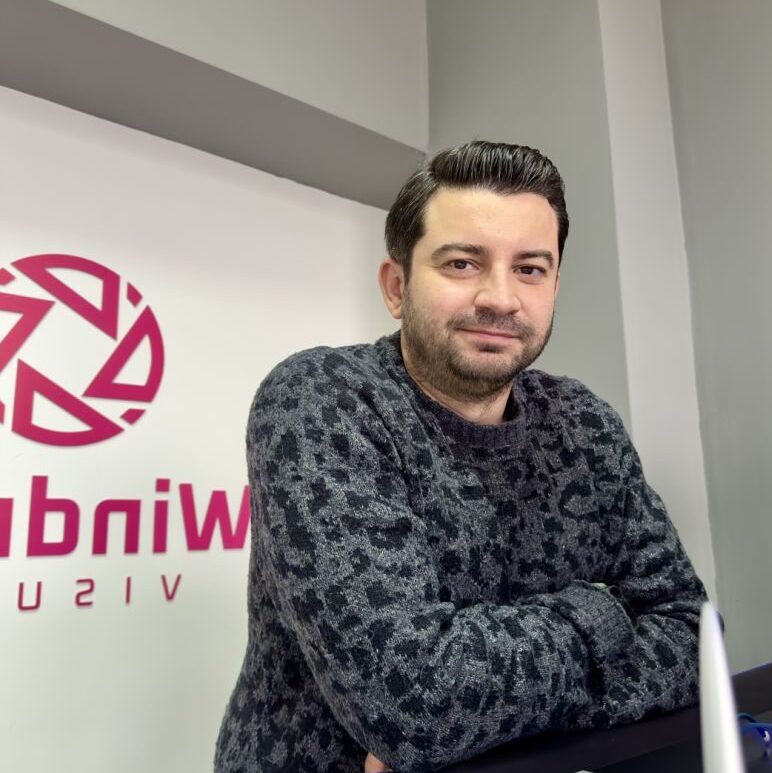
Vladimir is the founder of Windmill Visual and co-founder of Mad Chicken Studio.
He started out in video editing before moving into performance marketing, mobile gaming, and creative strategy.
Today, his work sits somewhere between creativity and marketing. He understands that making something look good is one thing. Understanding why it should exist, who it’s for, and what it’s supposed to achieve is another.
Take a look at his portfolio here.
If you’re working on a video project or want to exchange ideas, you can also book a time to talk with Vladimir.
What’s Behind the Creativity
💬 When a client says, “We need a video ad,” what do you need to understand before you start creating anything?
The first thing I want to know is:
- What are we trying to achieve?
- Who are we talking to?
- Where will the ad run?
- What is the product?
- What action do we want people to take?
And, most importantly, what problem are we trying to solve?
I don’t want to start editing before I understand the goal.
Otherwise, you can spend days making a beautiful video that doesn’t actually do anything for the business.
💬 How do you turn a simple client brief into a creative idea that has a real purpose behind it?
I usually start by looking for the problem, the audience, and the opportunity.
The brief might say, “We need an ad for our app,” but that’s not really a creative idea yet.
I want to understand why someone would care about the app, what motivates them, what objections they might have, and what could make them stop scrolling.
Then I try to turn that insight into a simple concept that can communicate the value quickly.
The creative idea should serve the goal, not exist just because it looks cool.
💬 What makes a video ad work? Is there a formula, or does it depend on the product, audience, and goal?
There are principles, but I don’t believe there is one universal formula.
A strong hook is important.
Getting attention quickly is important.
Clear communication is important.
But the right approach depends heavily on the product, audience, platform, and goal.
What works for a mobile game might completely fail for a SaaS product or a DTC brand.
That’s why I prefer testing different creative directions instead of trying to find one magic formula.
💬 How do you tell the difference between an idea that is genuinely strong and one that simply looks or sounds good?
I ask a simple question: what is this idea actually doing?
If you remove the music, transitions, effects, and beautiful visuals, is there still an interesting idea underneath?
A strong creative idea should communicate something, create curiosity, trigger an emotion, demonstrate a benefit, or make someone want to take action.
If it only looks good, it’s probably design. If it makes people care, that’s creative.
💬 You work with different hooks, concepts, and storytelling approaches. What have you learned from testing creative that you couldn’t have learned simply by deciding whether an ad was “good” yourself?
This is probably one of the biggest lessons I’ve learned.
You are not the audience.
I’ve had ads that I personally loved perform badly, and ads that looked almost too simple perform extremely well.
Testing removes a lot of your personal bias.
You start learning that sometimes the weird idea wins.
Sometimes the ugly video wins. Sometimes the first two seconds matter more than everything you spent the next 30 seconds creating.
That’s why I don’t believe in asking, “Is this a good video?”
I prefer asking, “What are we learning from this video?”
Mistakes
💬 What are some common mistakes you see people make when creating video ads – especially when they focus too much on making the ad look good?
The biggest mistake is confusing production quality with performance.
People spend a huge amount of time on transitions, effects, color grading, and perfect animation, while forgetting that the audience doesn’t owe them attention.
If the hook is weak, the message isn’t clear, or the ad doesn’t connect with the audience, better animation won’t save it.
I’d rather have a simple ad with a great idea than a beautiful ad with nothing to say.
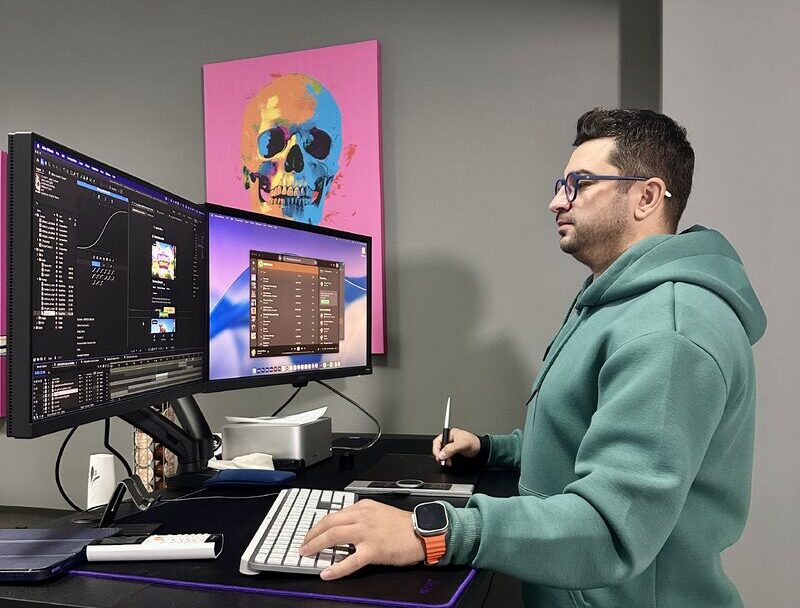
Vladimir in his creative work mode – Check out his Portfolio here
💬 Many freelancers focus on delivering exactly what the client asks for. How can a creative professional learn to understand what the client actually needs the work to achieve?
Start asking why.
If the client says, “We need five videos,” don’t immediately think about five videos.
Ask why five?
Where will they run?
What are we trying to improve?
What worked before?
What didn’t?
The brief is often just the starting point.
The more you understand the business problem behind the request, the more useful you become.
Eventually, you’re not just the person executing the brief. You’re the person helping write the brief.
💬 What do clients value from a creative professional beyond simply delivering the video or design they asked for?
I think clients value thinking.
Anyone can eventually learn how to use a piece of software.
The valuable part is knowing what to create, why to create it, how to communicate it, and what to do when the first idea doesn’t work.
Clients also value reliability, communication, and ownership.
If I see a problem, I don’t want to just say, “That’s not in the brief.” I want to say, “I see a problem here, and I think we should try this instead.”
That’s where you move from being a supplier to being a creative partner.
💬 You’ve talked about situations where clients add work that wasn’t part of the original agreement. What can freelancers do at the beginning of a project to prevent “just one more thing” from turning into a completely different scope of work?
Set expectations before you start. Be clear about what’s included, how many concepts or revisions there are, what the deliverables are, and what happens when something outside the scope comes up.
And don’t be afraid to have that conversation.
Saying, “Sure, we can do that, but it’s outside the original scope,” is completely normal.
I think freelancers sometimes are afraid that talking about scope will damage the relationship.
In reality, clear expectations usually create a better relationship because nobody feels surprised later.
Pricing
💬 Many freelancers compete by lowering their prices, especially when trying to get international clients. What makes a client see a creative professional as valuable rather than simply “someone who can make a video”?
Don’t compete on the ability to make the video.
There are thousands of people who can edit a video.
There are also AI tools that can generate something in seconds.
Your value comes from understanding what the video needs to achieve.
If you can understand marketing, audience psychology, performance data, storytelling and business goals, you’re offering much more than editing.
The cheapest editor is always going to exist. You don’t want to build your career around being the cheapest option.
Colaboration
💬 You’ve worked with international teams and clients for years. What makes remote creative collaboration work well – and what tends to cause problems?
For me, remote collaboration works when there is trust, communication and ownership.
I don’t believe you need someone watching your screen for eight hours to know whether they’re working.
Give people a clear goal, the information they need, and the freedom to figure out how to get there.
The biggest problems usually come from unclear expectations, poor communication or too many people giving conflicting feedback.
Remote work doesn’t mean less communication. It means communication needs to be more intentional.
One Skill I Wish I’d Learned Earlier
💬 Looking back at your own career, what is one skill or way of thinking that became much more important than you expected – and what would you tell someone developing that skill today?
Learning how to learn.
When I started, there weren’t endless courses, YouTube tutorials, and AI tools available.
I had to figure things out by practicing, making mistakes, and finding solutions.
But the biggest lesson wasn’t learning Premiere, After Effects, or motion design.
It was learning how to approach something I didn’t know how to do yet. Software changes.
Trends change. AI changes. Platforms change.
If you know how to learn and adapt, you can keep moving forward regardless of what changes around you.
Remote work doesn’t mean less communication. It means communication needs to be more intentional.
AI
💬 How is AI actually changing your work in creative advertising today? Where is it genuinely useful, and where do you still need human creative thinking, judgment, or a lot of trial and error?
AI is making the production side much faster.
We can generate ideas, create storyboards, produce backgrounds, generate footage, create avatars, experiment with different concepts, and get to a first version much quicker than before.
But I don’t think AI replaces creative thinking.
It actually makes that part more important.
The hard part isn’t generating 50 videos.
The hard part is knowing which 5 ideas are worth making, why they might work, who they’re for, and what you should learn when they don’t.
AI gives us more possibilities.
It doesn’t automatically give us better ideas.
💜 Vladimir’s Mindset Tip:
” Don’t try to make everyone happy. Try to make something that works”
