
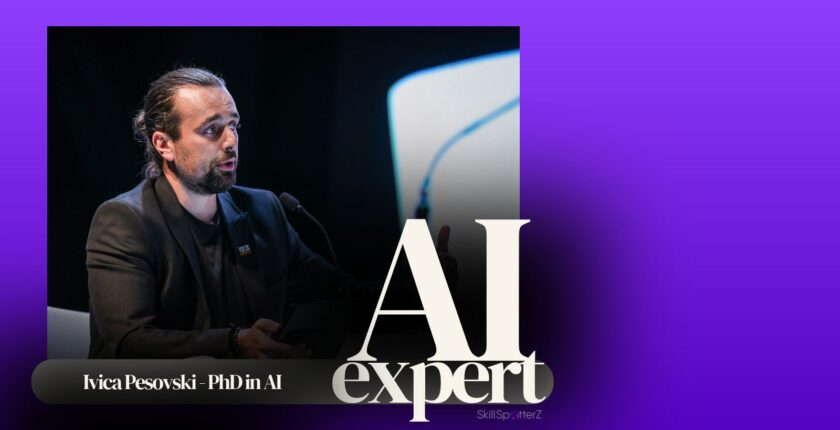
Ivica Pesovski: Most companies have AI users, not AI processes
AI is changing how we work, but knowing how to use the latest tools is only part of the picture. The bigger question is how we can use AI to do better work, develop our skills and stay relevant as our professions change.
In this interview, Ivica Pesovski shares what he is seeing inside companies today, which tasks are already changing, and what professionals and job seekers can do to adapt. We also talk about using AI responsibly, standing out to employers and why understanding your profession matters more than simply knowing how to use a tool.
 Meet Ivica
 Meet Ivica
Ivica Pesovski is Chief AI Officer at Brainster Group and holds a PhD in AI, with research focused on AI in education.
Over the past two years, he has worked with more than 30 companies on AI discovery and implementation. He also teaches computer science at Brainster Next College, AI at Brainster’s Practical AI Academy, and programming at NU High School Academy. With more than ten years of teaching experience, he has taught over 5,000 students across 10 European countries.
He is also a member of the committee developing North Macedonia’s national AI strategy and an investor in Orion, a platform helping businesses become more visible in AI-generated answers.
His work brings together research, technology, business and education, with a practical focus on how AI can improve the way people and teams work — and help people become better at what they do, not just faster.
Understanding What Is Changing.
💬 Let’s start with the biggest question: What has AI actually changed about the way we work already? What is happening in real workplaces today, beyond the predictions and hype?
The biggest change is not that AI does whole jobs.
It is that the first draft of almost everything now costs close to nothing.
Emails, reports, code, proposals, lesson plans, marketing copy, data summaries:
In the companies I work with, people increasingly start from an AI draft and spend their time reviewing, correcting, and deciding.
That shifts where the effort goes.
Writing gets cheaper; judgement gets more valuable.
∴ In software teams, including my own engineering team, developers use AI assistants daily for boilerplate, tests, and documentation, and spend more time on architecture and review.
∴ In operations and HR, AI handles document processing, internal knowledge search, and first-line answers.
∴ In education, teachers prepare materials in a fraction of the time, and students get feedback instantly.
What has not changed as much as the headlines suggest is the organisation itself.
Most companies today have AI users, not AI processes.
Individuals use ChatGPT, Claude or Copilot on their own, often without guidance.
The real gains appear when a team redesigns a workflow around AI, with clear rules on what it does, who checks it, and where the data goes.
That is the gap I see in almost every company I visit, and my Executive MBA research with 180 business leaders confirmed it.
Leaders strongly believe in AI’s value, rating it 4.32 out of 5, but AI governance was the lowest-scoring organisational practice in the study at 2.83 out of 5.
The strongest predictor of whether a company preserves its people’s expertise during AI adoption was not the technology or the budget, but how it manages its workforce through the transition.
💬 There is a lot of fear around AI replacing jobs. Which tasks are already being automated, which types of jobs are most exposed to change, and where is AI creating new opportunities?
The tasks being automated first share three features: they are text- or data-based, they follow a pattern, and their output is easy to check.
Examples I see in real companies:
- Summarising meetings, documents and email threads
- First drafts of standard documents: offers, job ads, product descriptions, reports
- Translation and localisation for routine content
- Customer support answers to repeated questions
- Data entry, invoice and form processing, basic reporting
- Boilerplate code, test writing and code documentation
The most exposed roles are those made mostly of these tasks: entry-level content writing, basic translation, routine customer support, data entry, junior administrative work and some junior development tasks.
Exposure does not mean disappearance.
It means the role shrinks to the parts AI cannot do, and fewer people may be needed for the same output.
💬 How can you assess which of your daily tasks are likely to be automated?
Do a simple audit. For one week, write down every task you do and how long it takes.
Then score each task on three questions:
- Is the input and output mainly text, numbers or images on a screen?
- Do I do it in roughly the same way each time?
- Could someone check the result quickly without redoing the work?
Tasks with three yes answers are the ones AI will take over first.
Try them with an AI tool now, so that you are the person who automates them rather than the person they are automated around.
Tasks with mostly no answers usually involve relationships, physical presence, unclear problems, negotiation or accountability. Those are the parts of your role to grow.
Adapting Your Career And Developing Valuable Skills.
💬 AI tools are appearing constantly, and it can feel impossible to keep up. Do people need to learn as many tools as possible, or is there a smarter way to decide what is worth learning for their particular profession?
No. Chasing every new tool is the most common mistake I see in my AI courses.
Most new tools are wrappers around the same few underlying models, and many will not exist in a year.
A smarter approach has three layers.
First, learn one general-purpose assistant well, such as ChatGPT, Claude, Gemini or Microsoft Copilot, whichever your company allows.
Learn to give context, break tasks into steps, provide examples and check results.
These skills transfer to every other tool.
Second, learn the AI features inside the software your profession already uses: your CRM, design tools, IDE, spreadsheet or LMS.
Third, add a specialised tool only when it solves a specific, recurring problem in your work.
Learn the principles once and the tools become interchangeable.
If you understand what a model is good at, where it fails, and how to give it context, a new tool takes an afternoon to learn, not a course.
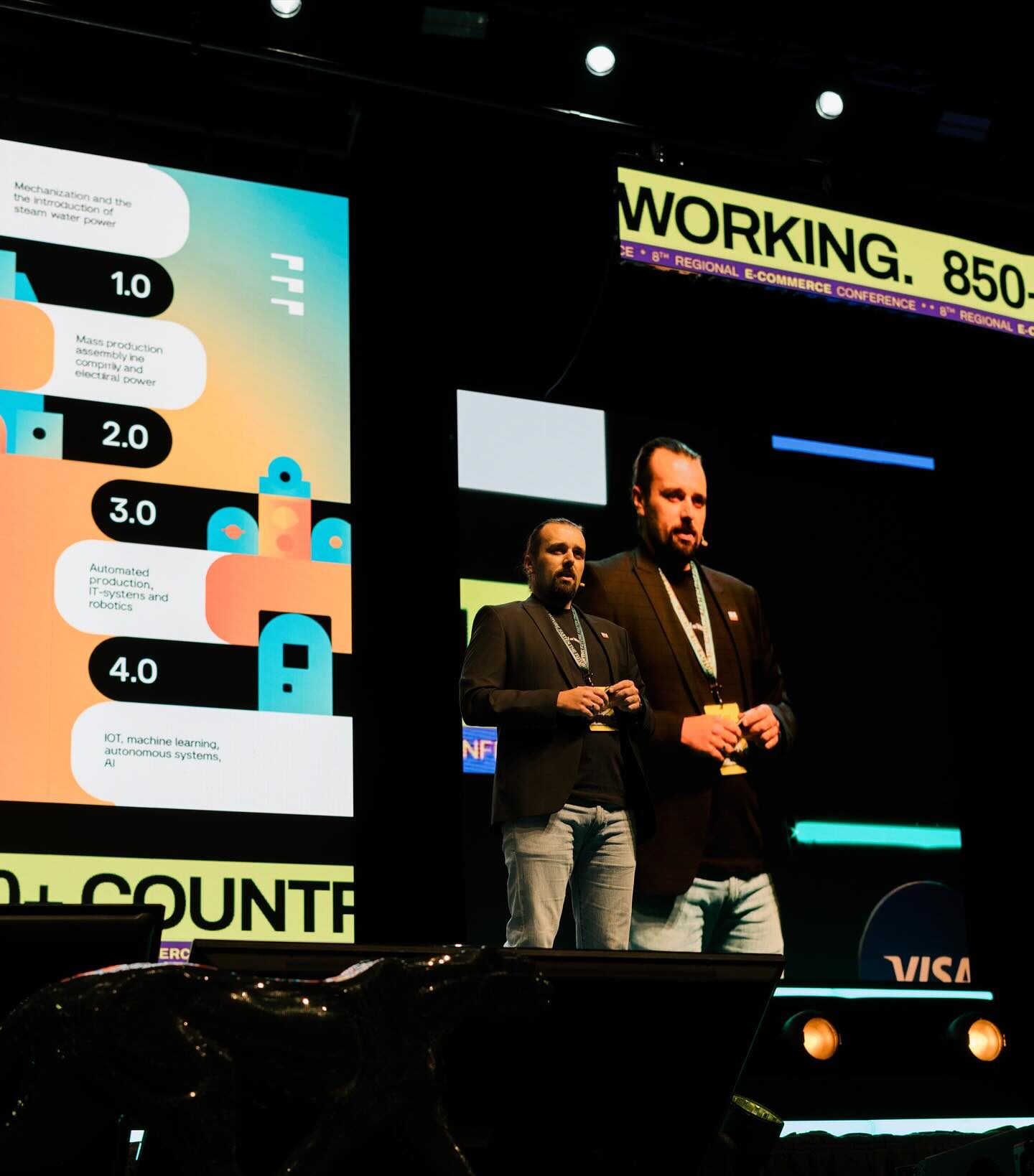
Ivica Pesovski speaking at the Regional E-commerce Conference during an AI talk.
💬 What makes someone more valuable to an employer as AI takes over more tasks?
When AI makes producing work cheap, the value moves to deciding what work to do and whether it is good.
The people companies compete for combine three things: deep domain knowledge, the ability to use AI fluently, and the judgment to know when the output is wrong.
💬 What should someone who has barely used AI do over the next 30 days?
Treat it like learning any new skill: small daily practice on real work, not theory.
A plan I use with beginners in my AI training programs:
Week 1, explore.
Pick one assistant your company allows.
Use it for 15 minutes a day on anything: rewrite an email, explain a document, plan your week.
Notice what it does well and where it gets things wrong.
Week 2, learn to brief.
Practise giving context: who you are, what the task is, who the audience is, what a good result looks like, and an example.
Compare results with and without this context.
This single habit makes the biggest difference.
Week 3, apply it to one real task.
Choose one task you do every week and do it with AI every time.
Keep the old version for comparison.
Week 4, measure and share.
Note the time saved and the quality.
Write down the instructions that worked, and show one colleague.
💬 What’s the difference between using AI to complete a task faster and actually becoming better at your profession because of AI? How can people check the quality of AI-generated work and recognise mistakes?
Doing a task faster means AI replaces your effort.
Becoming better means AI expands your thinking.
A marketer who asks AI for ten headlines and picks one got faster.
A marketer who asks why some headlines work better, tests them, and builds their own understanding of the audience got better.
This is close to my PhD research on AI in education.
Learners who use AI to get answers often perform worse later than learners who use it to get feedback, explanations, and practice.
The same applies at work.
Use AI as a sparring partner, not a ghostwriter, for the parts of your job you want to master.
To check the quality of AI-generated work, start by verifying every fact, number, name, quote, and reference against a source, because AI produces confident errors.
Then ask yourself whether you could explain and defend the output to an expert; if not, you do not understand it well enough to use it.
Using AI Responsibly In Everyday Life And Work.
💬 AI is increasingly part of everyday life, from editing photos to answering simple questions. What should people know about privacy when using AI, and how can they decide when using it is genuinely useful and when it isn’t?
On privacy, the basic rule is simple: assume anything you type into a consumer AI tool may be stored and, depending on settings, used to improve the service.
Read the data settings of the tools you use and turn off training on your data where possible.
Do not upload other people’s personal data, health information, ID documents, or private photos without thinking about where they go.
Business and enterprise versions usually offer stronger data protection, which is why companies should provide approved tools rather than leave employees to use personal accounts.
On usefulness, ask two questions.
- Does AI save me meaningful time or improve the result?
- And can I check whether the result is right? If both answers are yes, use it.
If you cannot verify the answer, as with medical, legal, or financial questions, use AI to prepare better questions for a professional, not to replace one.
💬 Once someone gets a job, what should they know about using AI at their work? Are there tasks or information they should never delegate to AI, and what should they understand about confidentiality, accuracy, company policies, and responsibility for the final result?
First, find out the rules before you use anything.
Many companies now have an AI policy listing approved tools and forbidden data. If yours does not, ask.
Using personal AI accounts for company data without permission is one of the most common and most avoidable mistakes I see.
Never put these into an unapproved AI tool:
client and personal data, contracts, financial information, source code under NDA, passwords and access keys, internal strategy, and anything marked confidential.
AI does not take responsibility; you do.
If you send a report with a wrong number, saying AI wrote it is not a defence.
Read everything before it leaves your hands.
Be open with your manager about how you use AI.
Transparency builds trust, and hidden use damages it when it is discovered.
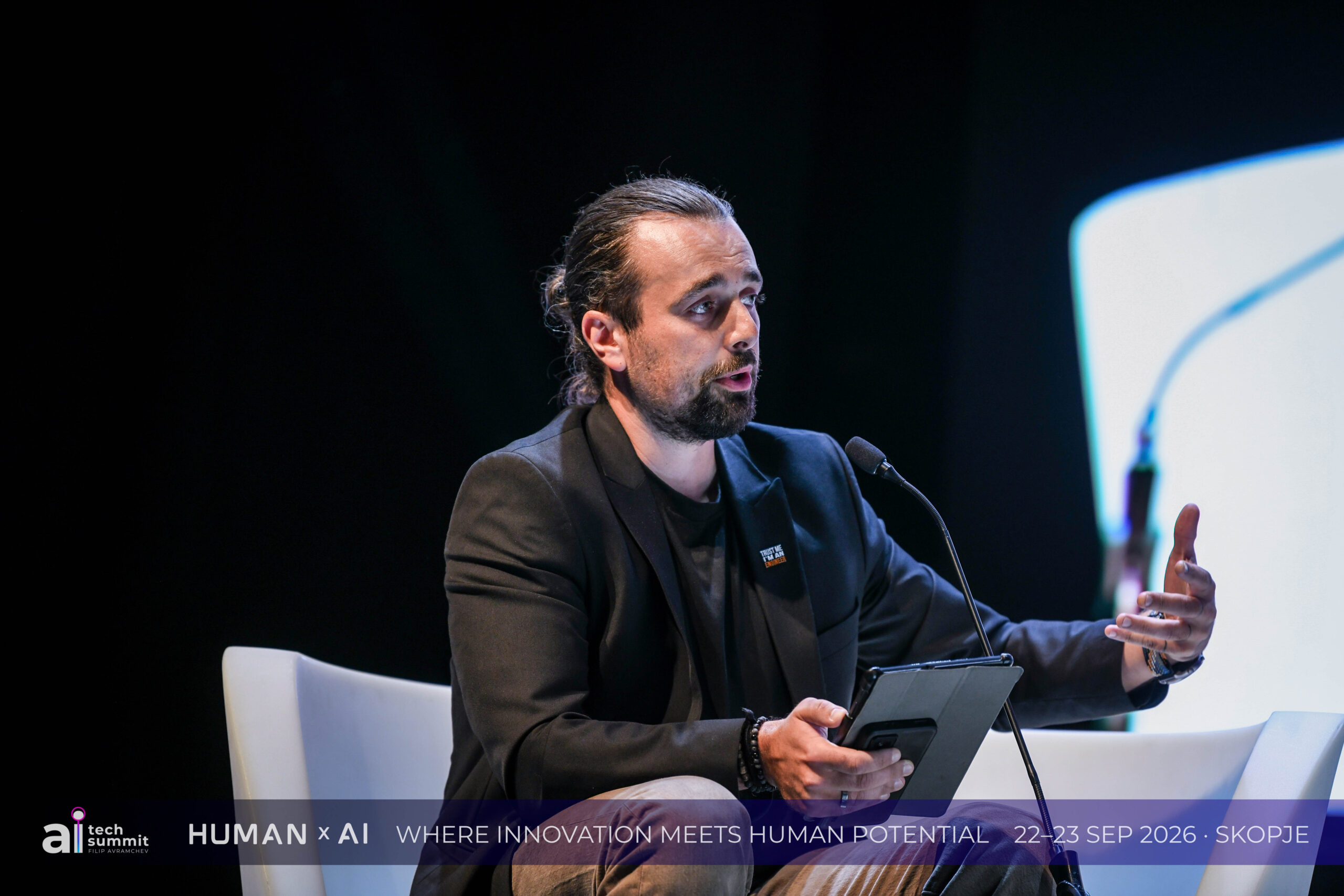
Ivica Pesovski participating as a panelist at AI Tech Summit Skopje 2026.
Finding Work And Standing Out To Employers.
💬 How can job seekers use AI to find suitable jobs, improve their applications, and prepare for interviews? What should they avoid?
AI is useful at every stage of a job search if you keep yourself in charge.
To find jobs, start by describing your skills, experience, and preferences and ask AI which roles and job titles match, including ones you have not considered.
For applications, paste the job ad and your CV and ask AI what the employer is looking for, which of your experiences are most relevant, and what is missing, then rewrite your CV yourself with AI as an editor.
To prepare for interviews, ask AI to act as the interviewer for that specific role, including difficult follow-up questions; answer out loud and ask for feedback.
If the role is international, practise in English.
What to avoid: sending the same AI-generated CV and cover letter to dozens of companies and inventing or inflating experience.
AI should make your application more accurate and more specific, never more fictional.
💬 How do employers recognise AI-generated applications and resumes? And how can job seekers use AI without losing their own voice or misrepresenting their experience?
Recruiters now read hundreds of applications that sound the same.
The signs are familiar:
polished but generic phrasing, the same buzzwords in every paragraph, claims with no specific numbers or names, and a cover letter that could be sent to any company.
Most employers do not object to candidates using AI.
What they reject is an application that shows no real effort and no understanding of the role, and the interview is where that becomes clear.
A good test: could you talk about every sentence in your CV for two minutes in an interview?
If not, rewrite it.
💬 If a candidate wants to show an employer that they can use AI effectively, what should they demonstrate?
Writing “proficient in ChatGPT” on a CV says almost nothing. Employers want to see a problem, an approach, and a result.
In the interview, be ready to show a real conversation with AI: how you briefed it, where it was wrong, and how you corrected it.
Students in our AI bootcamps at Brainster finish with projects like these, and they consistently get more interest from employers than candidates with certificates alone.
Showing how you caught the AI’s mistake is more convincing than showing what it produced.
💬 For someone living in a country with fewer local opportunities who wants to work remotely for an international company, how can AI help them become more competitive? What should they focus on to stand out among candidates applying from around the world?
This question matters to me personally.
I live and work in North Macedonia, and many of my students want international careers without leaving the region.
AI removes some barriers that used to be decisive.
Language is the clearest example: AI helps you write professional English, prepare for interviews in a second language, and understand documents from any market.
It also gives you access to learning, feedback, and mentoring that used to be available only in large tech hubs.
AI also narrows the gap in knowing how international companies work.
You can ask how a German company expects a CV to look, what a US startup means by “ownership” in a job ad, or how to write a clear weekly update for a manager in another time zone.
Things people in large hubs pick up from colleagues and mentors, you can now learn and practise on your own.
The limit is that every other candidate has the same tools.
AI levels the field but does not put you ahead on its own.
AI removes the disadvantage of where you live; what puts you ahead is the work you can show.
Preparing For The Future.
💬 What should students and people starting their careers learn today to prepare for a workplace where AI is increasingly common? Which skills should they focus on developing themselves?
The fundamentals of their field matter more, not less.
You cannot evaluate AI output in law, medicine, finance, or programming if you do not understand the subject yourself.
In my university teaching, I see students who use AI to skip learning struggle later, while those who use it to learn faster become strong very quickly.
What I would focus on:
- Deep fundamentals in one field, learned properly, with AI as a tutor and not a shortcut
- AI literacy: how models work at a basic level, what they are good and bad at, and how to give them context
- Data literacy: reading numbers, checking sources, spotting misleading claims
- Collaboration and communication: most valuable work still happens between people
If I had to give only one piece of advice to a student: Learn your field deeply enough to know when AI is wrong.
That is the skill that will not be automated.
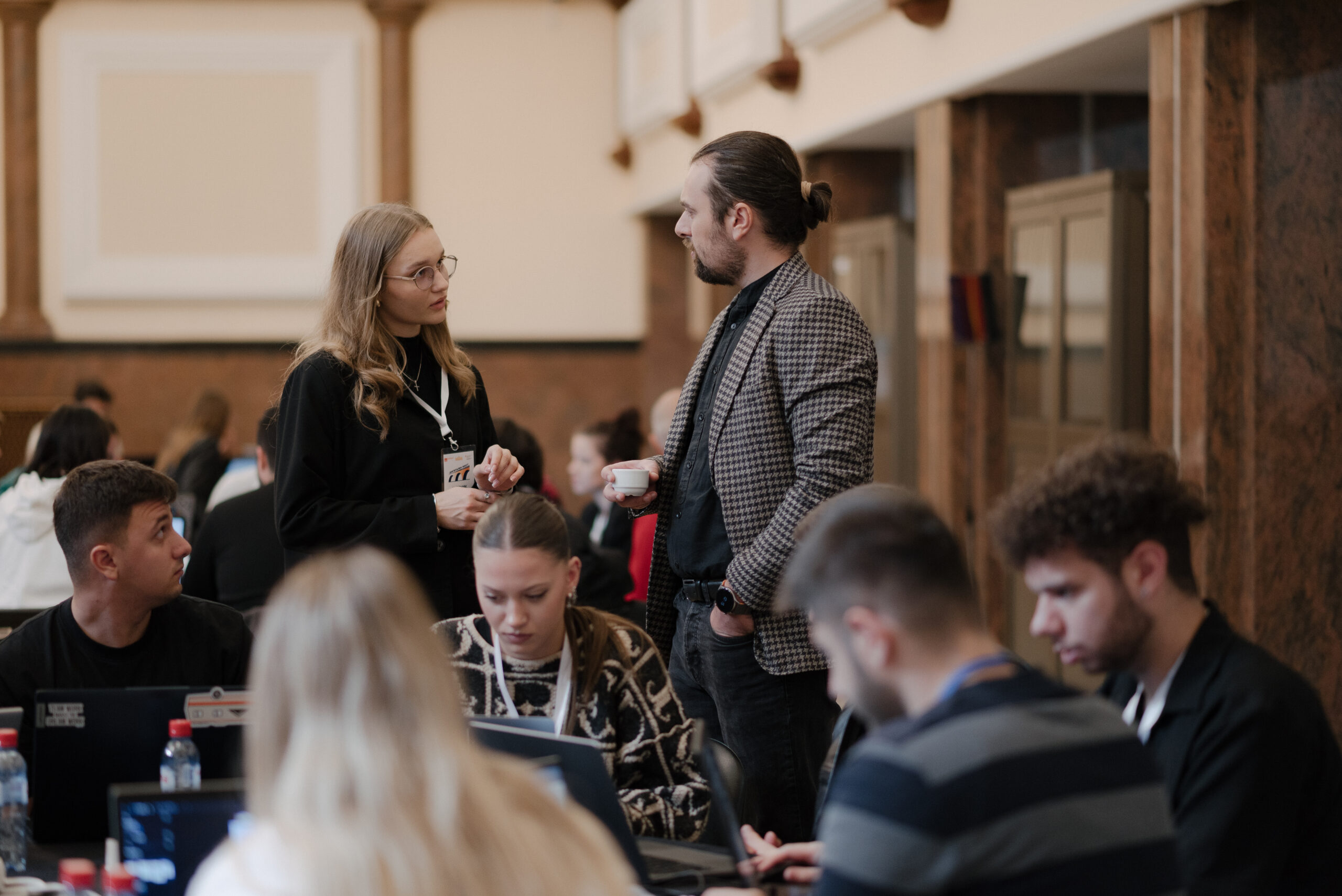
Ivica Pesovski mentoring students during an AI workshop in 2026.
💬 Finally, what three practical actions would you recommend that someone take now to prepare for the changes ahead?
Three practical actions for anyone, starting now:
- Automate one part of your own work this month. Pick a weekly task, rebuild it with AI, measure the result and document it.
You will learn more from this than from any course, and you will have a real example to talk about. - Build one public project in your field that uses AI. A tool, a case study, an analysis, a series of articles. Make it visible on LinkedIn or GitHub.
It becomes your portfolio and your reputation. - Teach what you learn. Explain it to your team, write a post, run a short session.
Teaching forces you to understand, and it makes you the person others come to when AI arrives in their work.
💜 Ivica‘s Mindset Tip:
” I’ll make this one AI-specific as well: you learn more from AI by arguing with it than by obeying it. AI is always confident, and confidence is not the same as being right. I treat every answer as the first opinion of a smart colleague who has not seen the full picture: worth hearing, worth questioning, never final. The day you stop questioning it is the day it stops making you better. “
If something in this interview raised a question, or you’d like to share how AI is changing the way you work, you can connect with Ivica on LinkedIn.
