
Junior UX/UI Designers in 2026: How to Build Experience, Get Noticed, and Land Global Opportunities
One of the biggest challenges junior UX/UI designers face today is not learning the tools — it’s knowing how to turn their skills into real opportunities.
You can learn Figma, study design principles, and create beautiful screens, but many beginners still struggle with the same questions:
How do I build experience without a job? How do I create a portfolio that builds trust? How do I get noticed by clients and companies outside my country?
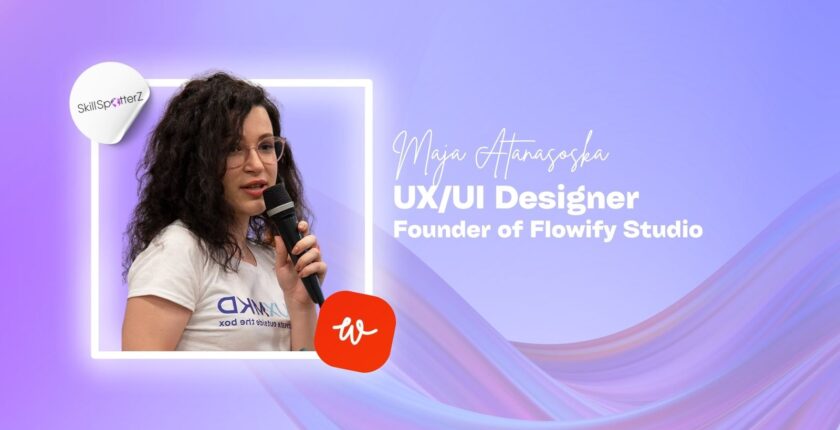
In this interview, UX/UI designer, founder of Flowify Studio, and creator Maja shares the practical lessons she learned from building products, communities, and her own career in design.
From working with AI and improving your design judgment to creating stronger portfolios, showing your work online, and becoming valuable to global clients — Maja shares what actually matters in today’s design industry.
If you’re starting your UX/UI journey or trying to move from learning into real opportunities, her advice can help you focus on the things that truly move your career forward.

Meet Maja,
Maja is the founder of Flowify Studio, a UX/UI designer, and a content creator passionate about making design education more accessible.
Through her Instagram page, @percalus.design, she shares educational UX/UI content in Macedonian language, is the author of the first interactive UX/UI design book in Macedonian, and created FreelanceSkopje.com a platform that helps freelancers, students, and remote workers discover great places to work in Skopje.
She loves all forms of art, and hopes to be known as someone who builds products and communities that genuinely make people’s lives easier.
Outside of work, she’s a lifelong #1 Dylan Dog fan.
AI + What do Clients Value.
💬 In 2026, AI can generate decent design in seconds – so what actually makes a junior or freelance designer still valuable to a real client or employer?
Your drive and your commitment will always matter to a client. Most of them don’t have time to design anything themselves.
AI can make something fast, but it stays inside general principles, so a lot of what it makes ends up looking the same.
A designer who’s creative and willing to spend the time builds something original, and that comes through even when AI is part of the process.
The right client picks up on that passion, on the fact that you want to learn and get better, and that you keep up with the tech. Nobody wants to work with someone who doesn’t care about the work at all.
💬 If AI can produce 10 design versions instantly, what becomes the designer’s real role in 2026: creator, editor, or decision-maker?
All three, but let me break it down.
As a creator, I don’t think you’ll spend much time actually making things soon.
You’ll have an idea, you’ll hand it to an AI, and it builds it.
Then you’re an editor, because it won’t land your vision every time, and you need a vision if you want to stand out.
So you prompt it again, and you fix whatever needs fixing. The one that matters most is the decision-maker.
You solve the design problem with some creativity, and when you do that, no AI replaces you, because you’re the one who made the choice that turned the project into something good to look at and good to use.
I’ve asked AI to help me work through design problems and it gets stuck inside principles and constraints that make sense for the project but don’t give you the best result.
The answer I came up with myself was the one that solved it and made the app look the way I wanted, even when the AI did the building.
Entry Level Problem.
💬 What’s the fastest way for a new designer today to build real experience when companies are hiring fewer juniors?
2016 or 2026, my answer is the same: work on projects that light something up in you.
Volunteer.
Design an app for a close friend who sells smoothies, or take on a problem your city has, like the design for public transport.
You build experience that way, you learn how to solve a real problem, and you walk away with a case study that sets you apart.
Keep making things no matter how many mistakes pile up. That’s the only road to what you’re looking for.
Design Judgment (taste).
💬 What do most freelancers misunderstand about ‘good design taste,’ and how can someone actively train it without working in an agency?
Some design will hit one person as wow and land on another as meh.
The real question I ask is whether that design, wow or meh, actually solves a problem.
The best way to train your eye is to observe and copy.
I don’t mean grab someone’s work and publish it as yours.
I mean study how it was built, try to rebuild it yourself, then do it again.
You start to understand layout, padding, spacing, the gaps between things.
Think of art students who sit and recreate a Da Vinci to learn how he did it.
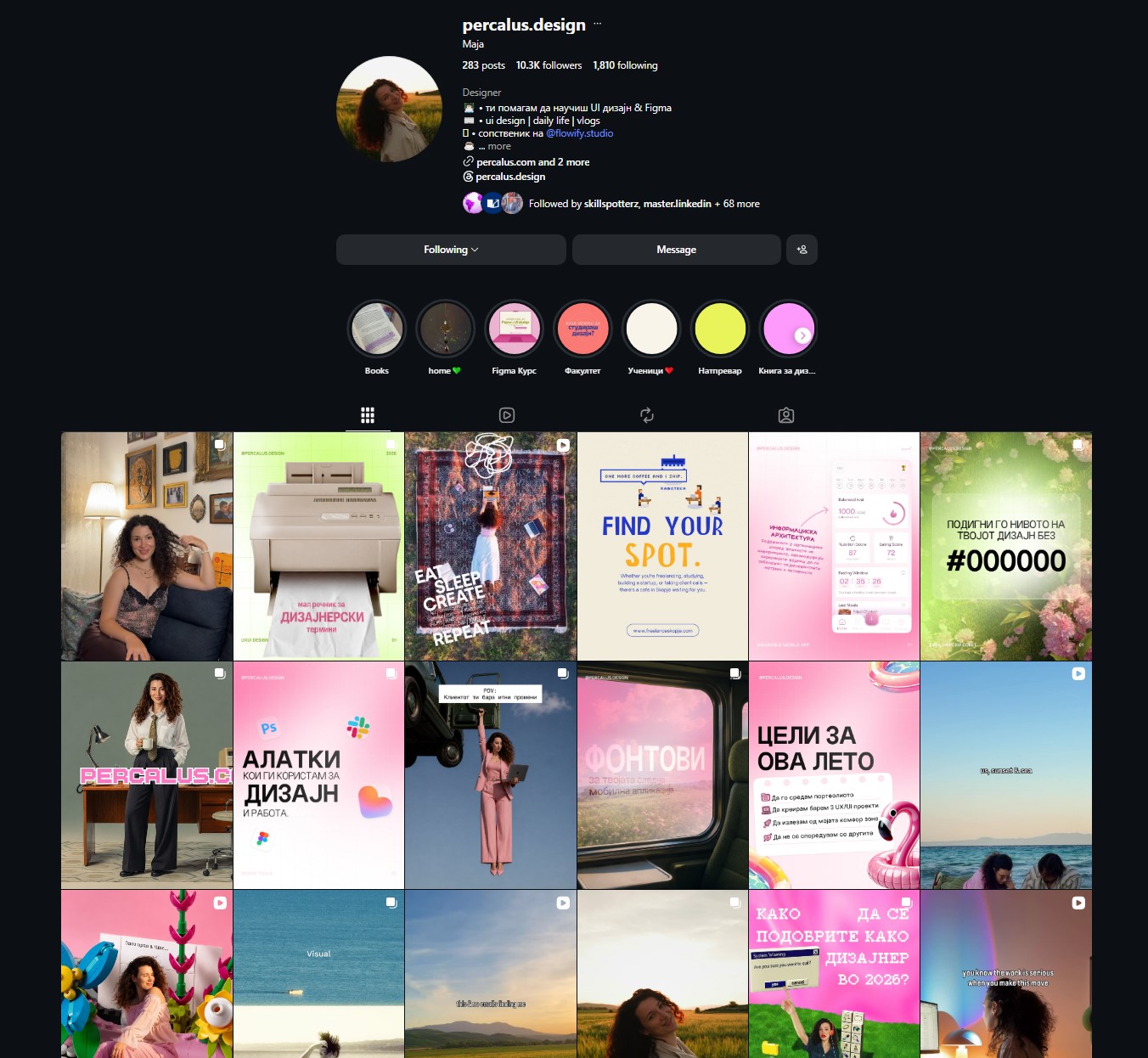
Maja’s Instagram Profile
Designers Stuck Phase Diagnosis.
💬 What are the signals that a freelancer is stuck in ‘task execution mode’ instead of building real career leverage?
Perfectionism, the fear of making mistakes, and the worry about what people around you will say.
Those three keep a designer frozen in place, and impostor syndrome shows up right behind them.
I’ve dealt with this a lot. I’m not perfect and I never was.
I put out projects that got valid, sharp criticism, and at the time I wasn’t ready to digest it.
It fed my impostor syndrome, it stalled my growth for a while, and it pushed me deeper into perfectionism and that fear of slipping up, which ended up delaying a few of my projects.
Don’t let that feeling run you.
Build something, design something, ship it.
You’ll never be perfect, and you’ll always find flaws in your own work, but the point is that you keep moving.
Take the criticism.
The faster you accept it and get back to baseline, the better you get. Get better and you’ll reach the skies.
Career Direction for Junior Designers.
💬 What is a realistic growth path you would recommend for junior designers in today’s market?
Start with the fundamentals before anything else.
Learn design principles, layout, type, color, spacing, the boring stuff everyone wants to skip.
Get good in Figma, because that’s where the work happens.
Bring AI into your process- tools like Claude for ideas and design help- and let it speed you up, but don’t hand it your critical thinking.
That part stays yours. Build real projects, turn them into case studies, and post them.
Take on small clients or a junior role, and treat every project as a way to get sharper.
From there you grow into senior work, or into running your own thing, depending on what you want.
Don’t be scared of AI.
Just don’t let it switch off your brain.
Visibility Problem.
💬 If someone is talented but invisible, what is usually missing – and what is the first thing they should fix?
There’s no reaction without action.
Talent doesn’t win today, and neither does motivation on its own.
The person who wins is the one who keeps going, works hard on the craft, on how they communicate, and on how well they can sell themselves.
Be the doer, not the dreamer.
And post everything.
This is the single biggest thing that will define you.
It’s scary, I know, but put your work everywhere: social media, Dribbble, Behance, LinkedIn, Reddit, all of it.
Post it. Share how you made it, make short videos about the process, and let them be imperfect.
Just share, share, share.
That’s how people actually get to know you.
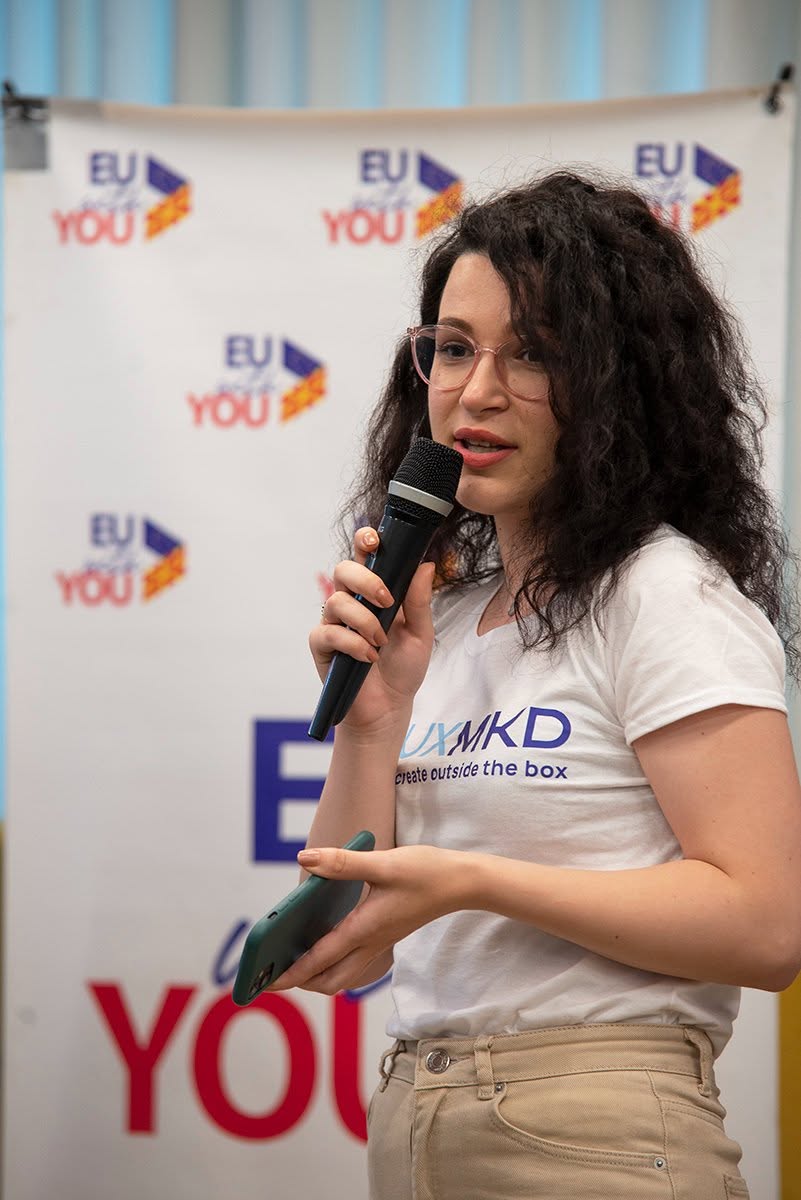
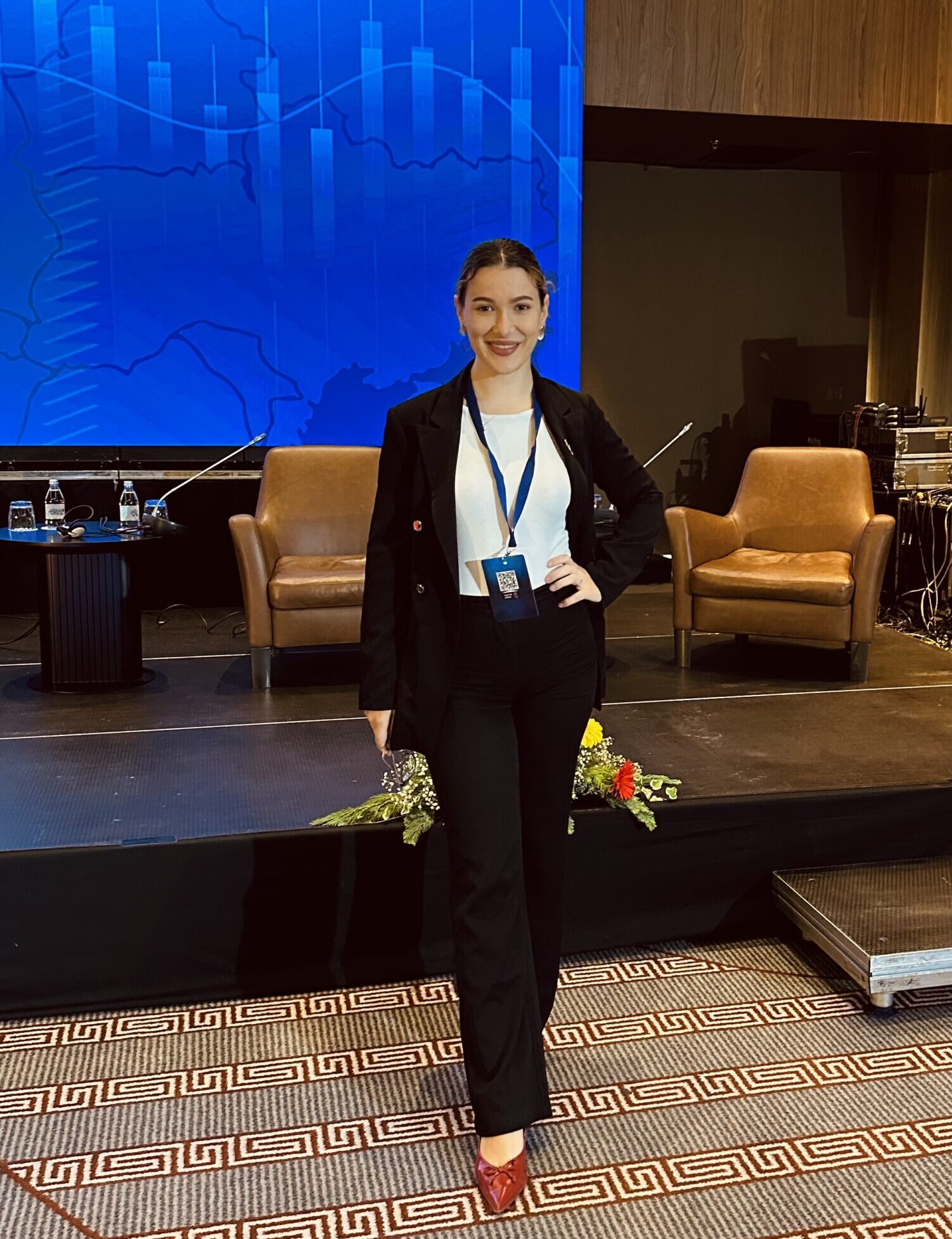
UX UI Conference
Global Visibility.
💬 How can designers from smaller countries realistically get noticed and trusted by clients in the US, UK, and other global markets? What actually builds credibility across borders?
Your professionalism.
Clients notice what you can offer them, how you solve their problem, how fast you move, and how well you actually understand what they need.
Customer care matters just as much.
Some clients are far harder than others, and you have to accept that as a fact and adapt to it.
You’ll lose hours, and sometimes you’ll lose money.
But a happy client recommends you to the next one.
Be responsible and give every client your best, even when it’s putting you through it, because that’s what brings more clients to your door.
Portfolio That Builds Trust.
💬 What kind of portfolio actually gets attention in 2026 – not just visually good, but strong enough to build trust for real work?
A pretty portfolio isn’t enough anymore, and it never really was.
What builds trust is a case study that shows the problem the client gave you, the way you thought through it, the choices you made, and what came out the other end.
Show the messy middle, not only the polished final shot.
A client wants to see that you can solve their problem, not that you can decorate.
Pick a few strong projects over a pile of weak ones, and where you can, show the result you got: more signups, a cleaner flow, a happier user.
Put your process in there, even short clips of how you worked.
And make it dead easy for someone to reach you.
That mix is what makes a stranger trust you with real money.
Freelancer vs Business Owner Shift.
💬 When is the right time for a freelancer to stop optimizing for clients and start thinking like a business owner?
The shift makes sense when you’re taking on more projects than you can handle, when you want to grow into a real business, and when you’ve got ambitions beyond the few projects a month that pay your bills.
I don’t think you ever fully stop optimizing for clients, though.
That’s just the job.
You always work at finding new clients, caring for the ones you have, and earning them back later.
Is it right for everyone? Yes, but not at the same time.
It’s a skill, and you have to stomach the stress that comes with it.
There were months when I was barely scraping by because I was pouring everything into customer care, giving people more than we agreed on, and putting my budget toward the team that helped me build, like the developers.
It’s stressful, and even now I get overwhelmed sometimes.
But it’s a skill you learn when you want to adapt and grow.
It’s not some gift you’re either born with or not.
The only personality that shouldn’t take this path is the one that doesn’t want it.
If you truly want it, you can get there.
60-day Practical System for a Junior Designer.
💬 If you had to design a 60-day system for a junior designer to become employable or client-ready in today’s AI world, what would they do daily?
Design something every single day.
AI can speed that up now, but you’ll still have to go all in.
For those 60 days, no-life it.
Less going out, less everything else, just the work.
Then post all of it on LinkedIn, Dribbble, Behance, Reddit, LinkedIn.
Make clips about how you built each thing: what tripped you up, what you wanted to learn, how you adapted.
Post every little piece of it.
Get yourself known out there, build the portfolio, and build yourself as a person while you’re at it.
Do that for 60 days and you’ll get hired.
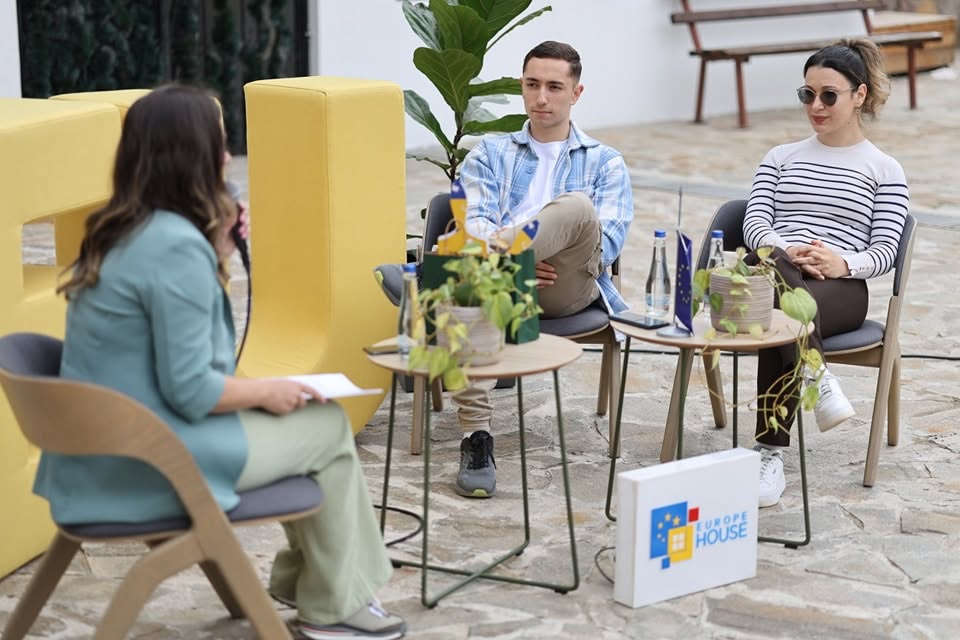
Event for Young People Organized by Europe House
Learning + Staying Relevant.
💬 What resources, habits, or platforms do you recommend and trust for UX/UI designers to stay sharp and continuously improve?
I keep a small, trusted set of sources instead of trying to follow everything, because that’s how you burn out fast.
I study real products I use every day and ask why the team made a certain choice.
For inspiration I’ll go to Dribbble and Pinterest, but I take those with a grain of salt, since a lot of it looks good and solves nothing.
For the stuff that lasts, I lean on design principles over trends.
Books like Refactoring UI and Don Norman’s work taught me more than any trend cycle ever did.
I follow a couple of designers and newsletters I trust, and I let the rest go.
The habit that keeps me sharp is simple: I design, I notice what’s working in the products around me, and I bring it into real client work where I can test it.
The trends move on every season, but the principles underneath them barely change, so that’s where I put my attention.
Pitching & Getting Clients.
💬 What makes a strong design pitch or proposal in 2026 that actually gets clients to say yes?
A strong pitch starts with their problem, not with your list of deliverables and a price.
Show the client you understand their business and where it hurts, sometimes better than they’ve put it into words themselves.
Talk about the outcome they’ll get, not the number of screens you’ll hand over.
Make it specific to them.
A template proposal reads like a template, and they can tell.
Back it with one relevant case study that proves you’ve solved something like this before.
Be clear about scope, timeline, and how you’ll communicate, so there are no surprises later.
Then be fast and human when you reply.
Clients say yes when they feel understood and they trust you’ll take care of them.
Market Demand.
💬 Which industries and types of companies are currently investing most in branding, graphic design, and UX/UI – and what is driving that demand in 2026?
From what I’m seeing, the money is going into a few clear places.
AI startups are everywhere right now, and they all need branding and a product that explains itself, because there are ten competitors launching the same week.
SaaS and B2B software keep investing heavily in UX, since their whole business lives or dies on whether people can actually use the thing.
Fintech spends big because trust is everything when money is involved, and good design is how you signal that you’re safe.
Then there’s health and wellness, and e-commerce brands that want to feel premium instead of generic.
What’s driving all of it in 2026 is simple: AI made it cheap and fast to build a product, so the market is flooded, and design is the thing that separates you from the noise.
On top of that, people are tired of AI-generated sameness, so a brand that feels human and credible stands out more than ever.
Beginner Mistakes.
💬 What are the most common mistakes beginner designers and freelancers make that slow their growth or make them invisible in the market?
Most of the time, they’re just not working hard enough toward it.
That can come from a hundred different places: procrastination, impostor syndrome, whatever else is holding them back.
But if you genuinely want it and you push for it, everything’s right there.
You’ve got the internet, you’ve got AI, you’ve got YouTube. You can get it.
Lessons Learned.
💬 Looking back, what are some decisions or approaches you would change from your early journey as a freelancer or designer, and what practical lessons should juniors take from it today?
I started designing back in 2017, and if I could talk to that version of me, I’d change a few things.
I’d post my work way earlier instead of hiding it until it felt perfect, because the perfect version never comes.
I’d take criticism without letting it knock me out for weeks.
I’d set clearer boundaries with clients, because there were times I gave so much for free that I was losing money to keep someone happy, and that doesn’t last.
And I’d treat every project as a case study from day one, instead of finishing the work and moving on without documenting any of it.
The lesson for juniors is this: share early, charge what your time is worth, take the feedback, and write down what you did and why.
Do that, and you’ll save yourself a couple of years of spinning.
💜Maja’s Mindset Tip,
“Hold on to the hobbies you loved as a little kid. They often become the things that keep you grounded, spark your curiosity, and remind you who you are when life gets busy.”
