
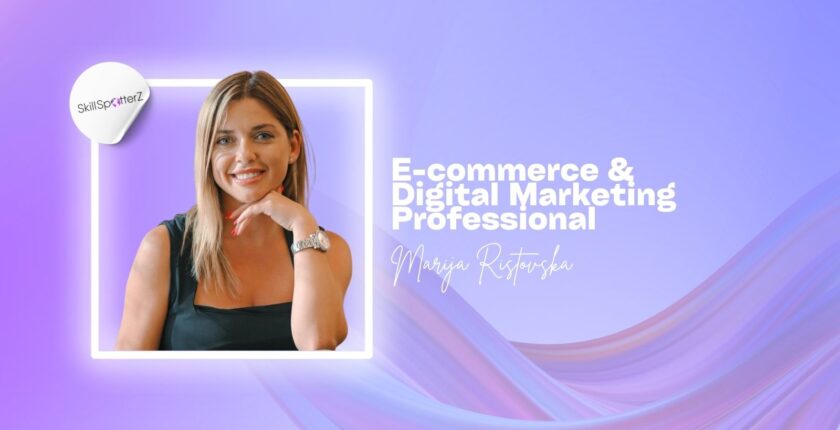
Freelancing In The E-commerce Industry.
As e-commerce continues to grow worldwide, it is also creating new remote and freelance opportunities for marketers, customer support specialists, project managers, designers, analysts, and digital professionals globally. Here are some quick stats about the e-commerce industry before Marija shares her story of how she entered the industry.
- The global e-commerce industry is experiencing massive growth, projected to exceed $6 trillion globally in 2026.
- Global Market Value: Total digital retail sales are forecast to reach approximately $6.8 trillion
- UK Market Size: The United Kingdom is one of the most advanced digital markets, with online retail accounting for over 31% of all retail sales and a market size of roughly $317 billion
- Emerging Technologies: Virtual and Augmented Reality (VR and AR) are increasingly used to let buyers “test” or visualize products from home, actively reducing return rates.
- Artificial Intelligence (AI): AI is heavily relied upon for personalized customer experiences, intelligent product recommendations, and targeted advertising
- Key Roles for E-commerce Freelancers: Store Developers, Digital Marketers, Product Copywriters, Virtual Assistants (VAs), Graphic Designers
 Meet Marija Ristovska,

Marija entered the e-commerce industry long before many of these trends became mainstream.
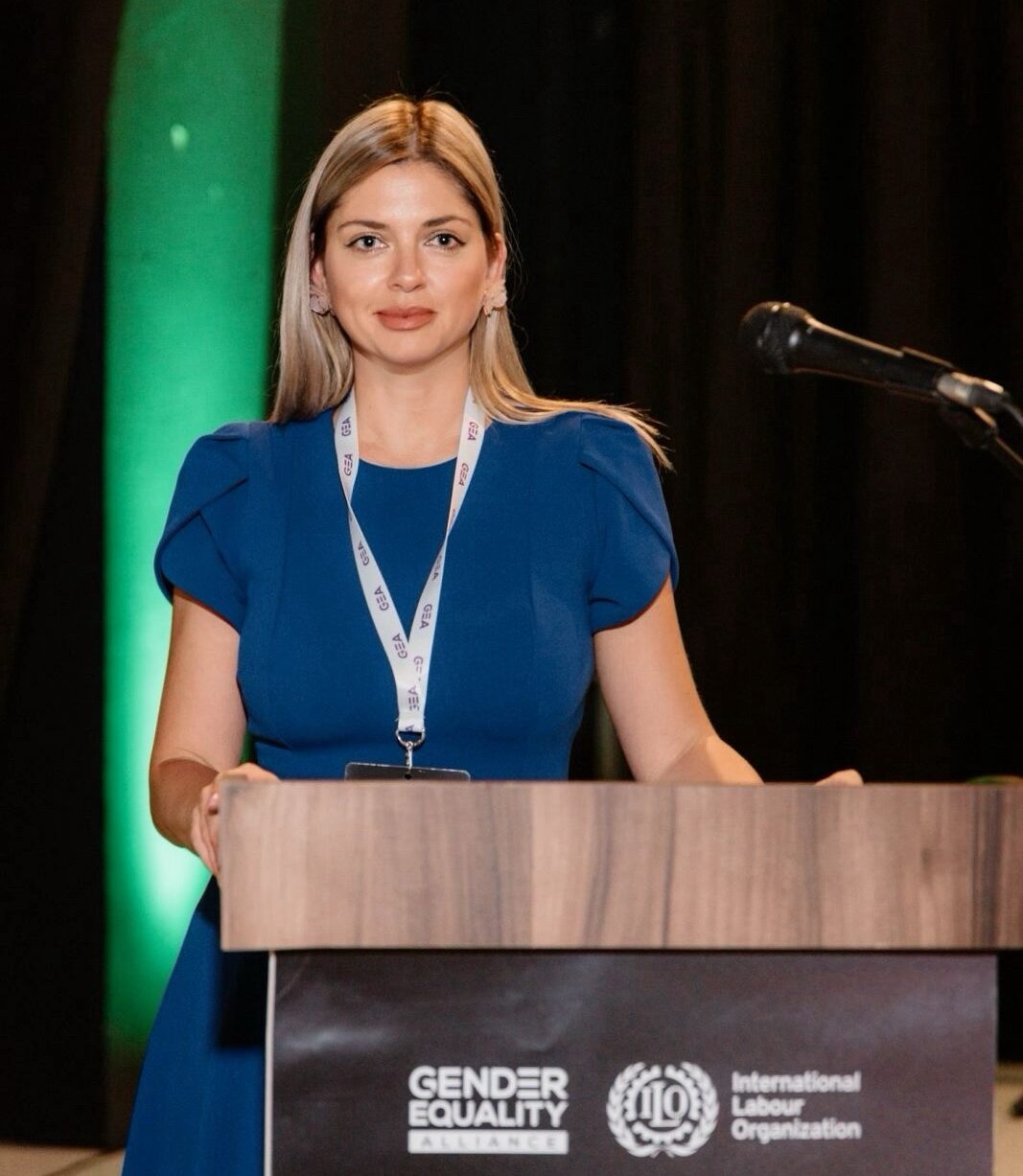
Today, she is a Project Manager at the Macedonian e-commerce Association and Head of the Gender Equality Alliance.
Alongside her role in shaping the regional e-commerce ecosystem, she works as a freelance marketer helping brands grow through strategy, communication, and digital marketing.
💬 Who is Marija beyond her job title, and how did your career path lead you into e-commerce?
Behind the title, I’m someone whose career has always been shaped by curiosity and hands-on experience.
I started my career as an intern at Grouper.mk, one of the first e-commerce companies in Macedonia, which sparked my interest in the digital economy early on.
Later, through multiple Work and Travel experiences in the U.S., I gained international exposure and a broader perspective on work culture, followed by a marketing specialist role at USAID in Skopje.
I then worked as a marketing manager for multiple companies in Skopje, where I naturally took on responsibilities such as managing stakeholders, building partnerships, planning, and coordinating complex initiatives.
I moved to Dubai and worked there for three years, mainly in hospitality management.
When I came back, I was offered the opportunity to join the Macedonian e-commerce Association as a Project Manager and lead a USAID-supported project, and it felt like a natural next step.
Here I am, 6.5 years later, still building at the intersection of e-commerce, international projects, and impact. In parallel, for the second year in a row.
I also lead the Gender Equality Alliance at the Workplace (GEA), which is a subsidiary of the Macedonian E-commerce Association.
💬 What was the e-commerce industry like when you started, compared to today?
When I joined the Macedonian e-commerce Association in 2019, the ecosystem looked very different.
There were far fewer online shops, the community was much smaller, and consumer trust in e-commerce was still developing, with most people preferring cash-on-delivery.
Many of the payment and delivery options we now consider standard, such as card payments, buy-now-pay-later options, scheduled delivery, quick commerce, or out-of-home delivery lockers, were either limited or non-existent.
Over the years, the market has matured significantly.
The number of e-shops has grown substantially, and our annual e-commerce conference, which initially gathered around 200–250 participants, now attracts over 900 attendees from across North Macedonia and the wider Western Balkans region.
I have to admit that the COVID-19 pandemic accelerated the adoption, helping e-commerce become mainstream and trusted, with growth continuing steadily in the years that followed, when many people saw the benefits of it.
💬 How do you help clients grow through your freelance and consulting work?
I usually help organizations grow by combining strategy with execution.
My work often starts with understanding their goals, audience, and market position, and then translating that into clear marketing, communication, or growth strategies.
I support clients with digital marketing strategy, positioning, content, event and campaign planning, PR and communications, as well as coordination between internal teams and external partners.
As a freelancer and consultant, I typically work with companies that need structure, clarity, and hands-on support, whether that’s launching a new initiative, improving visibility, entering new markets, or scaling existing projects.
My approach is very collaborative and focused on building sustainable systems, not just short-term results.
💬 What is your experience working at the Macedonian E-commerce Association?
Working at the Macedonian e-commerce Association is both demanding and incredibly rewarding.
What makes the role especially interesting is how hands-on it is, from strategy and partnerships to coordination, logistics, and execution.
Planning large-scale projects requires months of preparation, close collaboration with multiple stakeholders, donors/sponsors, partners, and a lot of attention to detail behind the scenes to make everything run smoothly.
This year’s e-commerce Conference was a great example of that effort paying off.
The event brought together over 900 participants from Macedonia and the wider Western Balkans region, creating a strong platform for knowledge-sharing, networking, and regional collaboration.
The feedback was very positive, and the conference reinforced the role of e-commerce as a key driver of digital growth, innovation, and trust in the market.
It was especially rewarding to see how the community has grown over the years and how the event now serves as a regional reference point for the industry.
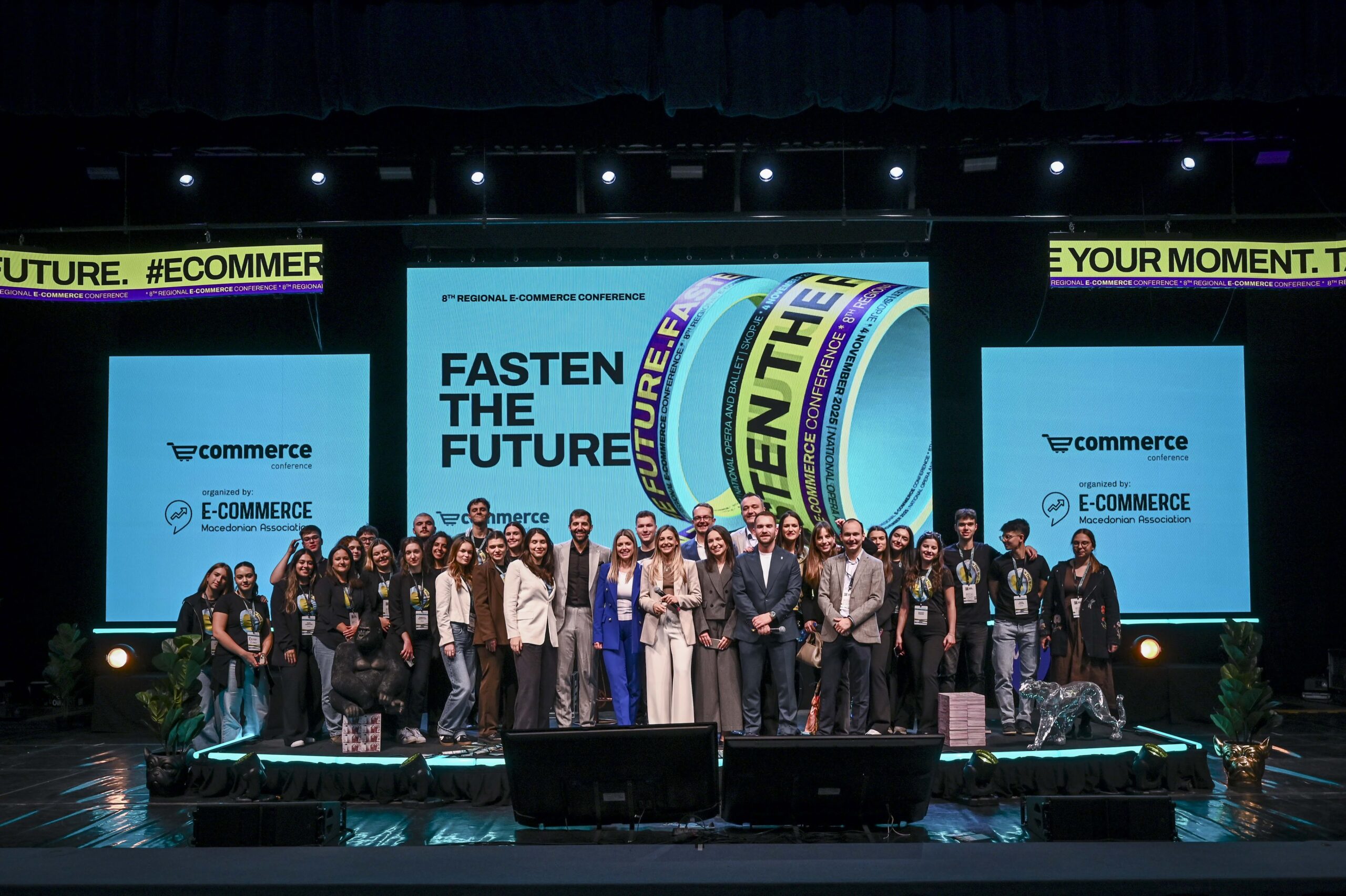
Macedonian E-Commerce Association, 2025 Conference
💬 Why do you think E-commerce is growing so fast worldwide, and how is it creating remote opportunities?
E-commerce is growing rapidly because it offers convenience, speed, and access to a much wider range of products and services than traditional retail.
Digital payments, improved logistics, and growing consumer trust have made online shopping part of everyday life, while businesses see e-commerce as a scalable and cost-efficient way to reach new markets.
This growth is also opening opportunities far beyond local markets.
E-commerce relies on digital skills such as marketing, customer support, data analysis, design, and operations – roles that can easily be done remotely.
As a result, professionals can now work for international companies regardless of location, making remote work a natural extension of the global e-commerce ecosystem
💬 What remote or freelance roles are most in demand in E-commerce today?
E-commerce businesses most often need remote support in areas that directly drive growth and customer experience.
This includes digital marketing (performance ads, content, SEO), CRM and customer support, product and website management, data and analytics, and logistics or operations coordination.
Many companies also rely on freelancers for specialized or flexible roles such as PR and communications, UX/UI design, copywriting, email marketing, and marketplace management.
As e-commerce scales quickly, remote and freelance talent allows businesses to stay agile without building large in-house teams.
💬 What are the key trends in E-commerce that freelancers should pay attention to?
One major trend is the integration of AI across e-commerce, from automated product descriptions and personalized recommendations to chatbots for customer support and AI-driven pricing optimization.
Freelancers who understand how to work with these tools will be increasingly valuable.
Another trend is omnichannel commerce, where brands combine online, mobile, social, and offline touchpoints to create seamless customer journeys, this creates demand for skills in social commerce, community management, and marketing automation.
Finally, data analytics is becoming essential, so companies want freelancers who can interpret customer behavior and help improve conversion rates.
💬 What skills or tools should someone learn first to start a freelance career in E-commerce?
For anyone starting a freelance or remote career in e-commerce, it’s important to first build a strong foundation in digital skills.
This includes understanding how e-commerce platforms work, basic digital marketing (social media, content, paid ads), and customer experience principles.
Learning how to use key tools like Google Analytics, Meta and Google Ads, email marketing platforms, and simple CRM systems can make a big difference early on.
In addition, soft skills such as communication, time management, and the ability to work independently are essential for remote work.
Finally, becoming comfortable with AI tools and automation, and knowing how to apply them in a practical way, is increasingly important for staying competitive in the e-commerce space
💬 What advice do you have for freelancers working with international E-Commerce clients for the first time?
Working with international clients can feel intimidating at first, but strong communication and reliability quickly build trust.
Being clear, structured, and proactive in your communication helps clients feel confident working with you, regardless of location.
Delivering on time, following through on commitments, and being transparent if something changes builds credibility over time.
Also, asking the right questions, showing cultural awareness, and approaching collaboration with curiosity rather than hesitation helps freelancers appear confident and professional in global teams.
💬 When starting an E-commerce business, what should come first?
When a new e-commerce business is starting out, the priority should be building a strong foundation rather than trying to do everything at once.
This means clearly defining the product or service, understanding the target audience, and setting up a simple, reliable online store with transparent pricing, payments, and delivery options.
Once the basics are in place, marketing and logistics can be gradually optimized based on real customer feedback and data.
Starting small, testing quickly, and improving step by step helps new e-commerce businesses grow sustainably and avoid costly mistakes early on.
💬 What are the most common mistakes E-commerce businesses make when scaling?
One common mistake e-commerce businesses make is trying to scale too quickly without a solid foundation, investing in ads before fixing the website, checkout experience, or logistics.
Another frequent issue is focusing heavily on acquisition while neglecting customer retention, communication, and trust-building.
Freelancers and remote workers can help by optimizing websites and funnels, improving customer experience, setting up CRM and email flows, and using data to guide decisions instead of assumptions.
Often, an external perspective helps businesses identify blind spots and implement practical improvements that support sustainable growth.
💬 How are AI and social commerce changing E-commerce and freelance opportunities?
AI and social commerce are reshaping e-commerce by making shopping more personalized, interactive, and community-driven.
AI is improving everything from product discovery and pricing to customer support and content creation, while social platforms are becoming full sales channels rather than just marketing tools.
These changes are creating new remote job opportunities for freelancers in areas such as AI-assisted marketing, social commerce management, community building, content strategy, data analysis, and customer experience optimization.
As e-commerce becomes more dynamic and tech-driven, freelancers who can combine digital skills with creativity and strategic thinking will be especially well-positioned for the future.
💬 What do international E-Commerce clients usually look for in a freelancer’s portfolio?
When hiring an international freelancer, e-commerce brands usually look for relevance, and proof of impact.
A strong portfolio clearly shows what the freelancer does, the types of projects they’ve worked on, and the results they helped achieve, not just tasks, but outcomes.
Well-written profiles, and a professional online presence signal reliability and confidence.
Beyond technical skills, clients often look for freelancers who understand business goals, can work independently, and communicate proactively, especially in a remote, international setting.
💬 Where do you personally stay updated on E-commerce trends?
I stay up to date through a mix of industry media, newsletters, and hands-on experience.
I regularly read platforms such as RetailX, eMarketer, Shopify Blog, Practical Ecommerce, and Think with Google to follow trends, data, and case studies.
I also rely heavily on LinkedIn, following industry experts, founders, and practitioners, and I love attending e-commerce conferences across Europe, which give me first-hand insight into emerging trends, technologies, and real-world use cases.
For me, the most valuable learning comes from combining trusted sources with direct experience and practical implementation.
💬 Which countries are leading in E-commerce innovation, and how is the Balkans evolving?
In terms of e-commerce innovation, countries like China and the United States are often seen as leaders.
China, in particular, has pushed the boundaries with mobile-first shopping, social commerce, and highly advanced logistics networks, making online shopping deeply integrated into everyday life.
The U.S. continues to innovate in areas like marketplace scale, personalization engines, and direct-to-consumer business models.
In comparison, the Western Balkans are still developing but catching up.
While the region started from a smaller base with lower trust in online shopping and limited digital infrastructure, progress has been rapid in recent years.
More businesses are adopting scalable e-commerce platforms, digital payments are becoming mainstream, and cross-border opportunities are opening up.
Although the pace and scale of innovation are not yet at the level of China or the U.S., the Balkans have huge growth potential, especially as local entrepreneurs and tech talent increasingly embrace digital business models.
💬 How can freelancers balance a full-time job with side freelancing work?
I believe that I organize myself better when I have more responsibilities.
So, I’m very intentional about how I organize my time, I’m selective about the projects I take on, and I make sure my full-time responsibilities always come first.
When things are clearly managed, side work doesn’t take away from your main role, it often strengthens your skills and perspective.
My advice is to start small and be realistic.
Choose projects that don’t create conflicts of interest, respect your working hours, and add value to your main role rather than compete with it.
Confidence comes from professionalism: if you deliver consistently and communicate clearly, there’s no reason to be afraid of what others might say.
Over time, results speak louder than assumptions.
💜 Marija, what’s one lesson, mindset, or mantra you keep coming back to?
Stay curious, keep learning, continuously upgrade yourself across different fields, and explore the world – every new place and idea shapes how you grow, in work and in life.
