

How to Become a Bookkeeping Virtual Assistant for US Clients
If you’re looking for a Remote career as a Bookkeeping Virtual Assistant for the US market, this article is your roadmap.
Meet Tony,
Tony Ristovski is the Co-founder of NextGen Academy and owner of a US focused bookkeeping practice, Books at Ease.
For over 7 years, Toni has worked with U.S. accounting firms and businesses, helping them manage their books while building remote bookkeeping teams.
Everything he teaches comes directly from real-world experience working with U.S. clients and managing bookkeeping operations firsthand.
That’s exactly why we asked Toni to share his tips and insights on how to position yourself as a bookkeeping virtual assistant, gain the right experience and skills, and ultimately land U.S. bookkeeping clients.
Let’s dive into Tony’s Interview for practical insights…
💬 What inspired you to create NextGen Academy? Who are you helping, and how?
The inspiration came from watching talented people hit a wall.
They had degrees, experience, and strong work ethics, but they didn’t know how to position themselves in the US market.
At the same time, I kept seeing US accounting firms struggling to find reliable, trained bookkeepers.
There was a clear gap: talented people on one side, desperate employers on the other, and nobody bridging the two.
NextGen Academy exists to close that gap. We train accountants and non-finance professionals who are willing to invest in their skills to work with US clients.
We teach US GAAP fundamentals, QuickBooks Online, American business terminology, how to communicate with US clients, and most importantly, how to actually get hired.
We’re not just teaching theory. We’re teaching people how to become US-ready bookkeepers, regardless of their starting point.
Beyond training, we’re building an international community that supports members throughout their entire journey, all the way to landing their first client.

Get in touch with Tony on LinkedIn
💬You’ve spent 7+ years training international accountants and building remote teams for US firms. How did you personally break into the US market?
Honestly? Through trial and error and a lot of persistence.
I started by offering value before asking for anything in return. I studied how US businesses operate, their pain points, their terminology, and their expectations.
Then I positioned myself as a solution to real problems, not just “cheap labor.”
Looking back, I was building what marketers call an “Ideal Customer Profile” I just didn’t know that’s what I was doing at the time.
The breakthrough came when I stopped competing on price and started competing on value.
US business owners (and any business owners for that matter) don’t want the cheapest option, they want someone who understands what they’re going through and can offer a solution that makes sense.
Once I proved I could deliver quality work consistently, referrals followed. One happy client leads to another. That’s still true today.
💬Is the demand for offshore bookkeepers and bookkeeping virtual assistants in the US growing? What trends should bookkeepers prepare for?
Absolutely growing.
The US has a significant shortage of accountants and bookkeepers. It’s been called a “talent crisis” in the profession. Fewer people are entering the field, and firms can’t hire fast enough.
At the same time, remote work has become normalized. COVID accelerated this by years. US firms that would never have considered offshore support in 2019 are now actively seeking it.
Trends to prepare for:
- Cloud-based everything. If you’re not comfortable with QuickBooks Online, Xero, and cloud document management, you’ll fall behind.
- Specialization matters more. Generalists are competing with AI tools. Specialists in industries (like e-commerce, agencies, SaaS) command better rates.
- Communication skills are non-negotiable. As automation handles routine tasks, your value increasingly comes from client interaction and problem-solving.
- AI is a tool, not a replacement. Learn to use AI for efficiency, not as a threat to avoid.
💬What are US firms actually looking for when hiring offshore bookkeepers or bookkeeping VAs today?
Three things above all else:
- Reliability. Can they count on you to show up, meet deadlines, and deliver consistent quality? This matters more than credentials.
- Communication. Can you write clear, professional emails? Can you ask questions when confused instead of guessing? Can you explain things simply?
- US-specific knowledge. Do you understand their world? Do you know and understand their industry? Are you familiar with tools such as QuickBooks Online?
Beyond that, they want someone proactive who spots problems before they become disasters, suggests improvements, and treats their business as if it matters.
What they’re NOT looking for: someone who needs constant hand-holding, disappears for days without communication, or treats every task as “not my job.”
💬You often talk about positioning. What does “positioning yourself for the US market” really mean in simple terms?
Positioning is about how you present yourself so the right clients choose you.
In simple terms: Don’t be “a bookkeeper.”
Be “the bookkeeper for e-commerce businesses” or “the bookkeeper who specializes in cleaning up messy books.”
When you’re generic, you compete with everyone on price.
When you’re specific, you become the obvious choice for a smaller group of people, and they’ll pay more for it.
Positioning also means speaking their language. Use terms like “monthly close” instead of “monthly accounting.” Mention QuickBooks Online, not generic “accounting software.”
Reference their pain points: cash flow problems, tax season stress, and disorganized receipts.
Think of it this way: A US business owner scrolling through freelancers isn’t looking for the best resume. They’re looking for someone who clearly understands their specific problem.
💬What services can an individual freelance bookkeeper or bookkeeping virtual assistant offer?
The good news: bookkeeping is very learnable, even if you don’t have a finance background. With the right tools and training, anyone can master these tasks.
Start with core services:
Matching bank transactions to receipts and records (reconciliation); Organizing expenses into the right categories; Creating and sending invoices; Following up on unpaid invoices; Preparing monthly financial summaries
As you gain experience, expand to:
Financial reporting and analysis; Cash flow tracking and forecasting; Bookkeeping cleanup projects (very lucrative-many businesses have years of messy books); Industry-specific services (e-commerce accounting, agency project tracking)
My wife Anastasia, who is the accounting mentor at NextGen Academy, often tells our students:
“Start with reconciliation and expense categorization. Master those. Then expand based on what clients actually need.”

Anastasia, Founder of NextGen Academy and the Accounting Mentor
💬Which bookkeeping tools or software do you consider essential for beginners, and which ones should they prioritize learning first?
Priority #1: QuickBooks Online (QBO)
This is non-negotiable. The majority of small US businesses use QBO. The good news? You don’t need an accounting degree to learn it. The software is designed to be user-friendly, and with guided training, you can become proficient in weeks, not months. Our Accounting course at NextGen Academy covers QBO in detail, and our students practice on real scenarios until they’re confident.
Priority #2: Project management tools
Google Workspace, Gmail, Asana. You’ll live in these tools daily. Learn keyboard shortcuts. Get comfortable with shared documents and asynchronous collaboration.
Priority #3: Communication tools
Slack, Zoom, Loom (for video walkthroughs). US clients expect quick, clear communication.
Priority #4: Receipt management
Hubdoc, Dext (formerly Receipt Bank), or similar tools. Many bookkeepers spend hours chasing receipts—knowing these tools makes you more efficient.
Later additions:
Xero (second most popular after QBO); Bill.com or Melio for payment processing; Gusto or ADP basics for payroll context
Don’t try to learn everything at once. Master QBO first. Everything else builds on that foundation.
💬What does a typical day look like for a bookkeeper working with US clients?
This depends on your location and setup. Here’s what I’d suggest for someone working from the Philippines or a similar time zone:
Your competitive advantage: “Follow the Sun”
When you work while US clients sleep, you can complete tasks overnight and have everything ready when they wake up.
This is a huge selling point, you’re essentially giving them a 24-hour operation.
- Morning (before the US wakes up):
Complete deep work without interruptions: reconciliations, categorizing transactions, preparing reports; Process any tasks that came in overnight; Prepare updates and questions for when clients come online - Overlap hours (late evening for you, morning for US):
Quick Zoom calls if needed. Real-time communication via Slack or email – Clarify questions and get approvals - Communication throughout:
Send client updates (“Your books are reconciled through November”); Ask clarifying questions (“I see a $500 charge at Home Depot—what was this for?”); Document processes and notes for your own reference - End of your workday:
Flag anything urgent for the client to see when they wake up – Prepare your task list for tomorrow - The key insight: The time zone difference isn’t a disadvantage, it’s a feature.
You get focused work time while they sleep, and they get progress delivered by their morning. That’s powerful.
💬Are there busy seasons when demand increases? How should bookkeepers use those periods wisely?
Yes, absolutely.
Peak seasons:
January-April (Tax Season in the US). Everyone realizes their books are a mess and need cleanup before filing.
Year-end (December-January): Annual closes, W-2s, 1099 preparation. – Quarterly deadlines: Estimated tax payments, quarterly reports.
How to use these periods:
- Prepare in advance. October-November is when you should be reaching out to potential clients about year-end cleanup. Don’t wait until January when everyone’s scrambling.
- Charge appropriately. Rush work and cleanup projects during tax season can command premium rates. Don’t undervalue your time.
- Build relationships during slow periods. Summer is typically slower. Use that time for training, improving your skills, and prospecting for new clients.
- Document your work. When things get busy, having good systems prevents chaos.
💬What are the most common mistakes beginners make with US bookkeeping workflows or when working with their first clients?
Not asking questions. They guess instead of clarifying, then make errors that damage trust. It’s always better to ask a “dumb” question than to fix a mistake later.
Over-promising and under-delivering. Saying yes to everything, then missing deadlines. Be realistic about what you can handle.
Ignoring communication. Not updating clients, going silent for days, not acknowledging messages. Even a quick “Got it, working on this” goes a long way.
Not having a system. Working from memory instead of checklists. Every client should have a documented process.
Trying to figure everything out alone. When you’re stuck, hours can turn into days. Having a mentor or community to ask saves enormous time and prevents costly mistakes.
Treating bookkeeping as just data entry. Your value isn’t typing numbers—it’s keeping the financial picture accurate and catching things that don’t look right.
💬How should bookkeepers handle clients who are disorganized or who provide documents late?
This is one of the most common challenges, and how you handle it sets you apart. This is where having an experienced mentor can save you time and money.
First, set expectations upfront. Before starting work, be clear: “I’ll need all receipts and bank access by the 5th of each month to deliver your reports by the 15th.”
Second, be proactive. Don’t wait for documents. Send reminders. Make it easy. Give them a folder to drop receipts into, use receipt capture apps, create simple systems.
Third, document the impact. If they’re late, respond professionally but clearly: “I received your documents on the 12th instead of the 5th. I’ll have your report by the 20th instead of the 15th.”
Fourth, consider pricing accordingly. Some bookkeepers charge extra for “cleanup” clients who consistently require chasing. That’s fair. Disorganization costs you time.
Finally, pick your clients. If a client is consistently chaotic and disrespectful of your time, it may not be worth continuing. The best clients respect the process.
💬What is the first step an international bookkeeper should take to land their first US client?
Get clear on what you offer and who you help.
Before you do anything else, answer these questions:
- What specific services can I deliver confidently?
- What type of business do I understand best?
- What makes me different from the thousands of other bookkeepers?
Then, start building proof. Offer to do a small project for free or at a discount for someone you know, even a small business in your own country that operates similarly to US businesses.
Get a testimonial. Document the work.
After that, it’s about visibility. Create a professional LinkedIn profile that speaks to US businesses. Start engaging in communities where your potential clients hang out.
Here’s an approach that works well:
Start by supporting US accounting practices rather than going directly to small businesses. Accountants always need help, and they’re easier to find.
At NextGen Academy, we actively connect our trained members with US accountants in our network who are looking for reliable support. It’s a faster path to real experience.
We also run Sales workshops that cover everything from positioning yourself as a trusted advisor to setting up effective LinkedIn outreach systems.
The first client is the hardest, after that, referrals and testimonials create momentum.
💬What pricing models or service packages are the best for bookkeepers —hourly, monthly, or project-based?
Each has its place:
- Hourly works when: – You’re starting out and don’t know how long tasks take – The scope is unclear or variable – One-time projects like clean-up/catch-ups
- Monthly retainer works best for: – Ongoing bookkeeping relationships – Predictable income for you – Clients who value consistency
- Project-based works for: – Supporting US accountants who delegate entire small business clients to you—you handle all the bookkeeping for that client as one project – Setup work (new QBO account, chart of accounts configuration) – One-time deliverables
- My recommendation for beginners: Start by supporting accounting practices and charge per hour or per project (per client they delegate to you). This is the best way to learn at someone else’s expense. They’ll train you on their processes, you’ll get real experience, and you’ll get paid while learning.
As you gain experience and confidence, you can start offering your services directly to small businesses, charging a flat monthly fee.
💬How can beginners get their first testimonial if they haven’t worked with clients yet, and are testimonials so important?
Testimonials are nice to have, but not necessary to get started.
If you start by supporting accountants (which I recommend), they’re completely okay working with someone who doesn’t have references, as long as you have basic knowledge.
Many will even train you so you can help them properly.
Later, you can use the clients you worked with within their accounting practices as portfolio examples when you reach out to small businesses directly.
But here’s the truth: if you clearly understand their pain points, communicate them well, and offer a solution that makes sense, you often won’t even be asked for references.
Demonstrating understanding is more powerful than a testimonial from someone they don’t know.
💬How and where can bookkeepers learn US accounting and bookkeeping terminology to feel confident when communicating with clients?
They should join NextGen Academy.
This is exactly why we built it.
We saw people struggling to find reliable, practical training specifically for the US market.
Our courses cover the terminology, the workflows, the tools, and the communication style that US clients expect.
All taught by people who actually work with US clients every day.
💬US firms often worry about trust and communication with offshore bookkeepers. How can someone overcome this?
This concern is valid. They’ve often had bad experiences.
Here’s how to overcome it:
- Over-communicate at the start. Be the person who always responds quickly, always provides updates, always confirms understanding. Make them feel secure.
- Be on video. Propose a quick Zoom call early. Seeing your face builds trust faster than emails ever will.
- Document everything. Send summaries of what you did, what you’re working on, what’s coming next. Transparency builds confidence.
- Admit mistakes quickly. Everyone makes errors. The difference is whether you hide them or address them honestly. “I made a mistake categorizing these expenses. Here’s how I’ve corrected it and what I’ll do to prevent it in the future.”
- Show understanding of their world. Use their terminology. Reference their industry. Demonstrate that you understand American business culture.
- Be consistent. Show up when you say you will. Meet every deadline. Consistency over time is what truly builds trust.
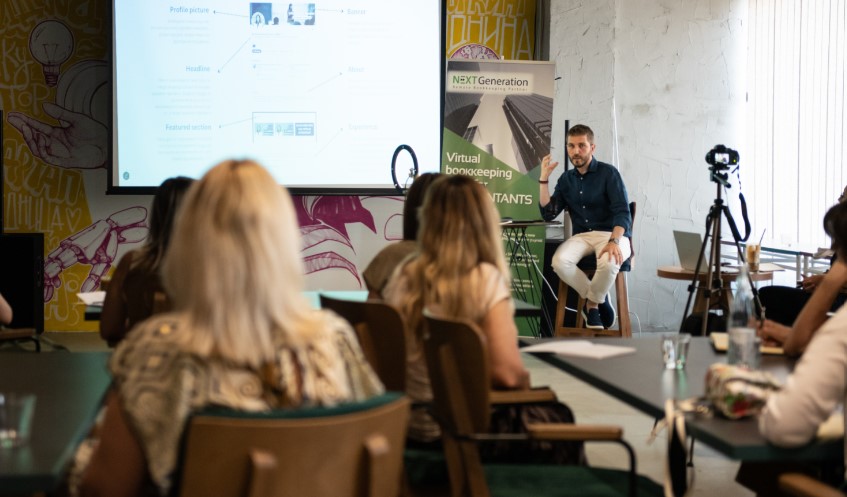
💬What practical skills or real-world projects do your students work on to prepare for US roles?
At NextGen Academy, we focus on delivering practical skills, and our mentors are actively working in their fields of expertise. This is how we always know what’s working and what’s just theory.
The Accounting Course is where students learn everything they need about the US accounting industry and gain practical QuickBooks Online skills through hands-on exercises.
Sales Workshops cover positioning and presenting yourself as a trusted advisor in the US market—including LinkedIn optimization and outreach strategies.
And I’m excited to announce, we’ve opened our Online Community, where members can practice bookkeeping on real projects for US clients.
There will be masterclasses, networking and Q&A sessions, and a job board with open US positions from our active network of accountants.
💬What results have your students achieved so far? Any success stories you can share?
Yes. And these stories are what keep me going.
We’ve had students who went from local accounting jobs earning a fraction of US rates to working as remote bookkeepers for American firms, often doubling or tripling their income while staying in their home country.
In our last Sales workshop, one student booked four sales calls within the first two weeks of the program.
One graduate started with a 2-week trial at a US practice, proved her value, and is now managing full books for multiple clients within that firm.
Another used the training to launch her own freelance bookkeeping service targeting American small businesses.
The pattern I see: Students who take the training seriously, apply what they learn, and show up consistently get results. It’s not magic, it’s execution.
We now have graduates who’ve become referral partners themselves, recommending the program to others in their network because they’ve experienced the transformation firsthand.
💬How do you personally keep up with tax law or accounting regulation changes?
This is the biggest misconception people have.
We’re not CPAs, and we don’t try to be.
For complex tax and compliance questions, we’ve partnered with CPAs and other professionals from the US and Europe, so we refer those projects to them.
That said, I stay informed through:
- Industry newsletters and blogs. Accounting Today, CPA Practice Advisor, and similar publications cover major changes.
- Professional networks. Conversations with US accounting practice owners. They’re dealing with changes in real-time and share what’s affecting their clients.
- Continuing education. My wife Anastasia has 15+ years of international accounting experience and an MBA. She handles the technical depth.
For bookkeepers: You don’t need to be a tax expert, but you should understand basic concepts and know when to escalate questions to a CPA.
💬Will AI replace entry-level bookkeeping roles? How can bookkeeping virtual assistants stay relevant?
AI will change the job, but I don’t believe it will eliminate skilled bookkeepers.
Here’s why:
AI is great at pattern recognition and data entry. It’s not good at judgment, client relationships, or handling exceptions.
And bookkeeping is full of exceptions, unusual transactions, missing information, and client-specific nuances.
What AI will replace:
Pure data entry roles; Basic categorization work; Simple reconciliation (in many cases)
What AI won’t replace (yet):
Client communication and relationship management; Problem-solving and judgment calls; Cleanup of messy, disorganized books; Understanding context and business specifics
How to stay relevant:
- Learn to use AI as a tool. Use it to work faster, not compete against it.
- Move up the value chain. Don’t just stop at one skill. Learn as much as you can and add more value and help more clients.
- Develop client relationships. AI can’t have a Zoom call with a stressed business owner and calm them down. You can.
- Specialize. Generic bookkeepers are most at risk. Specialists in complex industries are safer.
The bookkeepers who thrive in 5 years will be those who use AI to do more, not those trying to hide from it.
💬If someone could only do three things this month to move closer to becoming a bookkeeping virtual assistant for US clients, what should they be?
Get comfortable with QuickBooks Online:
Create a free trial account. Watch tutorials. Practice until navigation feels natural. This is the foundation everything else builds on.
Create a professional LinkedIn profile targeting US businesses.
Write it in English. Be specific about what you offer. Start connecting with and engaging in US small business and accounting communities.
Complete one real or simulated bookkeeping project.
It could be for a friend’s small business, a volunteer organization, or even a practice scenario. The point is to move from theory to practice. Document what you did, and ask for feedback or a testimonial.
These three things, technical skill (QBO), visibility (LinkedIn), and proof of work (a project), put you ahead of 90% of people who just think about doing this but never start.
💜Toni, what’s one lesson, mindset, or mantra you keep coming back to?
“The best time to start was five years ago. The second-best time is today.”
I hear from people all the time who say, “I wish I had started learning this years ago.” Well, you didn’t, and that’s okay. The question is what you’re going to do now.
Every expert was once a beginner who just didn’t stop.
Every successful freelancer sent awkward first pitches, made embarrassing mistakes, and faced rejection.
The difference between those who make it and those who don’t isn’t talent.
It’s persistence.
It’s doing the work when you’re not sure it will pay off. It’s showing up consistently, even when progress feels slow.
Your future clients don’t care where you started. They care whether you can help them today.
So start today. Learn the tools. Send the message. Do the work.
Everything else follows.
If you’re serious about becoming a Bookkeeping Virtual Assistant for US clients, we recommend exploring the two courses, which are focused on real-world practical knowledge with US Clients:
